There are days my voice is Glinda clear, I mean bubbly and floaty and I can do trills and decorations. And then there are days like today. I think it is the RA. Inflammation seems to fit the bill.
I can at least sing early music. It just does not sound like me. It sounds somewhat appropriate if you think of reed instruments, but it’s not what I trained to get.
But, there are days where my voice is what I trained it to be. So I guess I have two voices due to RA. I have to think of it like that because I can’t predict exactly what day will be what voice and it’s not ideal for singing for an audience. I miss theatre so much. So much.
I did also spend a long time putting all my info for each and every portrait I have. And I still have a few hundred unattached files.
I also cut my Maria of Cleves gown lining, it’s been de-coloured and I will need to put it through a bluing wash after it’s washed properly.
I have my next fancy frock well underway thanks to being able to use my patterning theory and research. Today is a day of rest though. Adrenaline is kind of magic but it is best thought of as a redistributor of energy not additional.
But I am definitely going to be adding my shirt patterns to my patterning book and that needs to be done asap.
After spending so much time with my files the last thing I want to do is spend more time in my files.
But I’m also not really up for making anything as I keep avoiding working with heavy fabrics and the Nordrhein fashion is nearly all heavy winter gear.
I do have small hand sewing projects though.
And I could use the summer as an excuse to make a fluffy dress.
So what do I mean? I mean the kind of dress that may have a normally fitted bodice but the sleeves and skirt are simply gathered not made with much structure at all.
This is not the same effect as is seen in the very finely pleated but very structured skirts seen from Westfalen through Saxony and south.
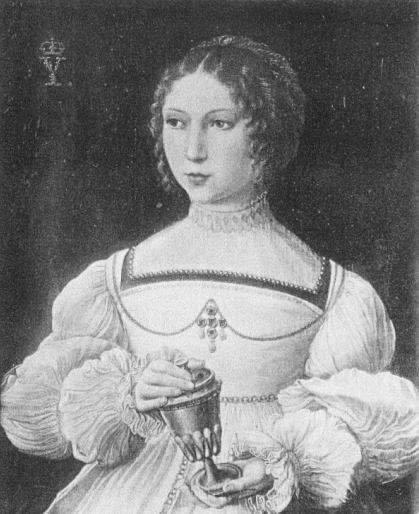
This is my favourite. Hanging sleeves made of gathers? I mean this is gloriously unpractical and yet really would be quite comfortable. I had initially dismissed this as a copy or of a stylised portrait. But it is clearly meant to be Sibylla of Cleves.
So much going on here but this is a perfect example of the softness of the gathers. They crumple. I get a very similar effect with my wool crepe dresses I made years ago. But these could be silk or linen.
And this one I think is by the same previous artist from the same region.
Isabella of Denmark.
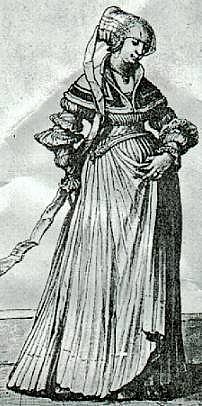
This is part of a set of illustrations of women by Holbein. I think this is an example of the same kind of dress.
So now I am reconsidering this gown worn by Anna Meyer. The main difference here is the fit of the sleeves. They are classic two part fitted sleeves not a series of bands. In the full portrait her skirt has fairly deep pleat creases, like the illustration directly above.
Though really I should make a fitted chemise and finish the short chemises as well. I do need them desperately.
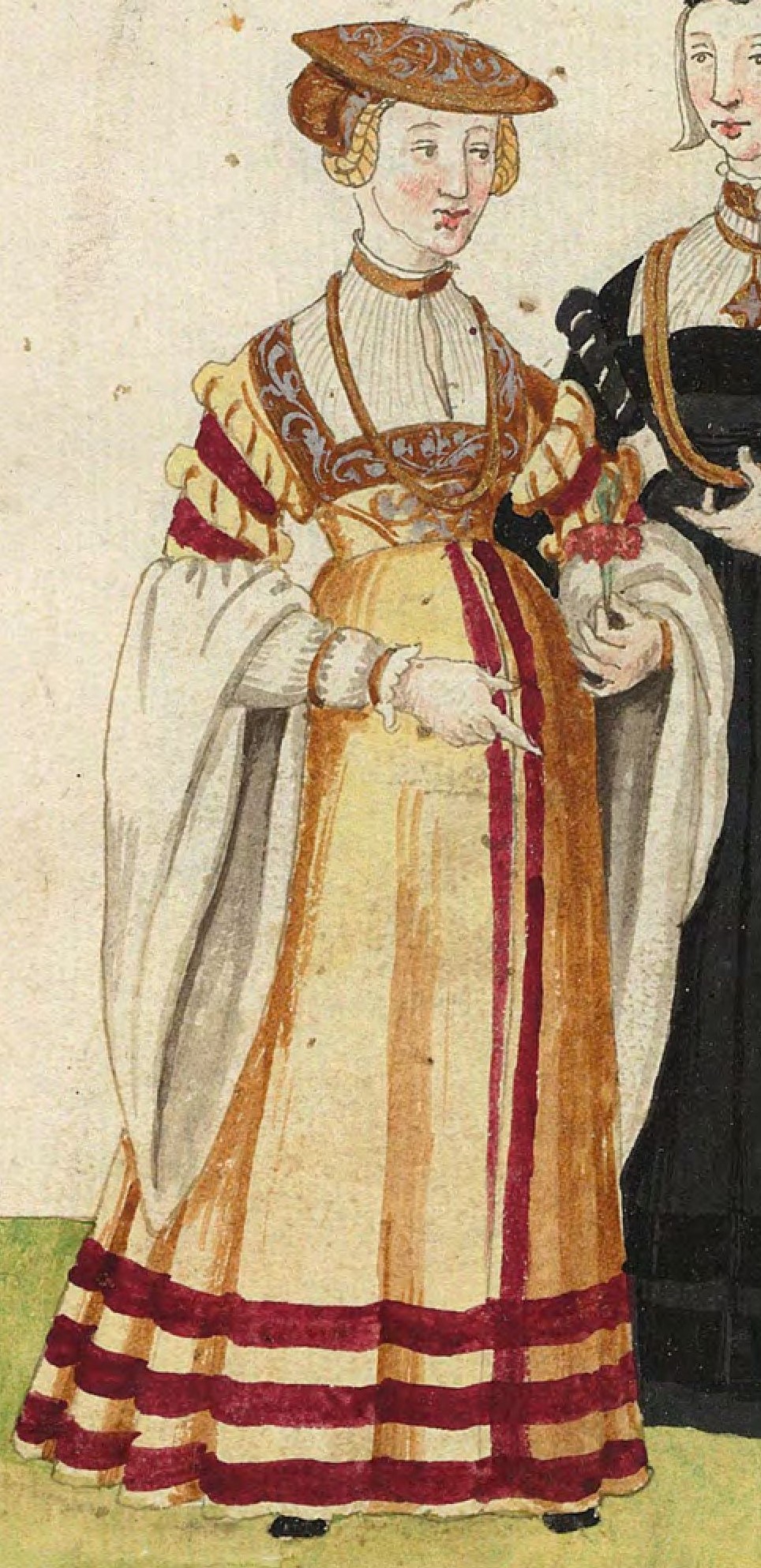
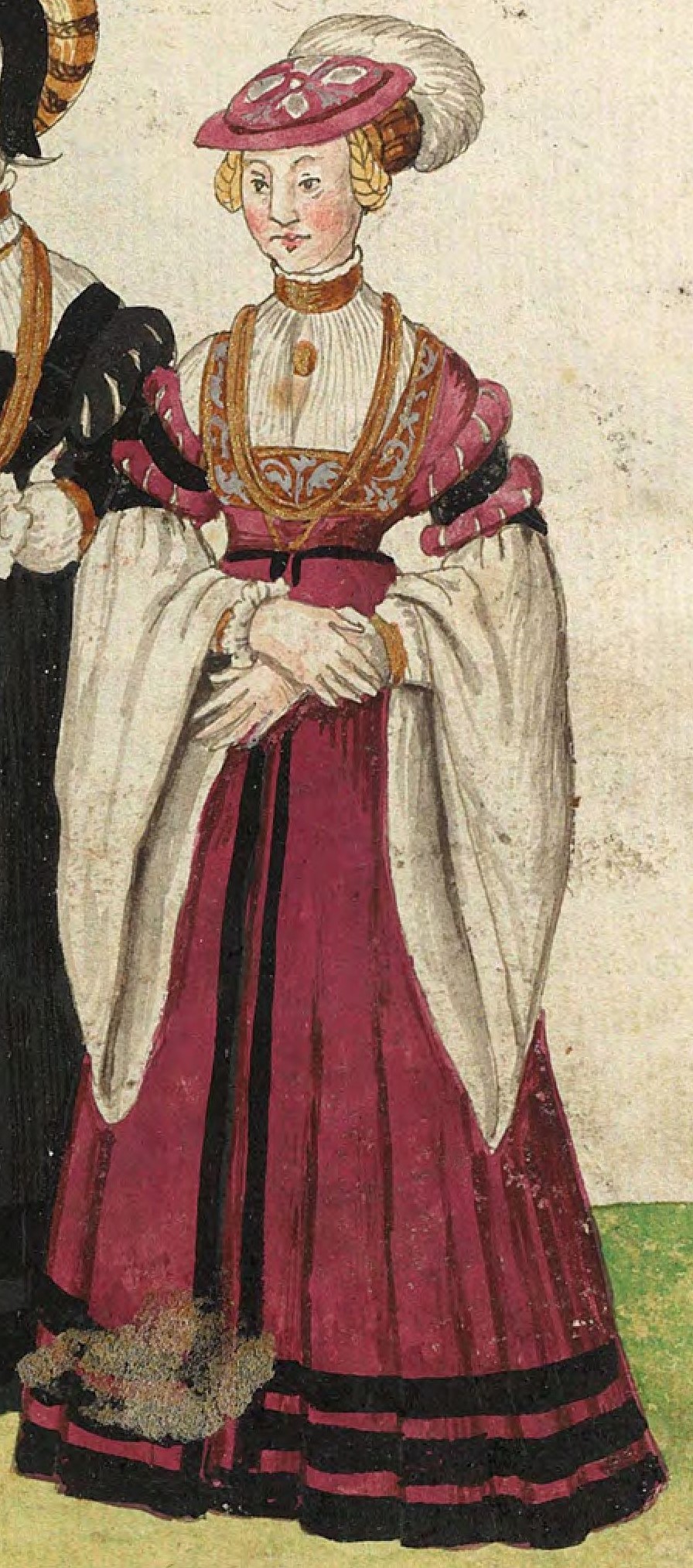
I recently shared the NRW images from the Christopf Weiditz “Codice de Trajes” having finally decided to trust his interpretation of the Julich-Cleves-Berg dress as everything else is so very good- clearly derived from either portraits or people.
But it got me really delving into the written texts I have. And to find more. And I have. But in order to put my new information into context I’d have to transcribe and reorganise the information that hca come before. SO that’s why I have been so quiet this week. It’s been bulk copying and editing into tables and different formats.
And I am very glad I did.
Some of what I have done has been to understand why two main sources of research divert over a few terms. It’s been a long road and with a lot of turns and loops back to where I started but I think I finally understand it. In the context of the area and the rest of dress of the region.
And it’s quite exciting as I hope that figuring this out means being able to actually find more information. My advantage has been the digitzation of information previously locked in libraries across the world, my disadvantage is in not being able to see in person some really obvious sources of information.
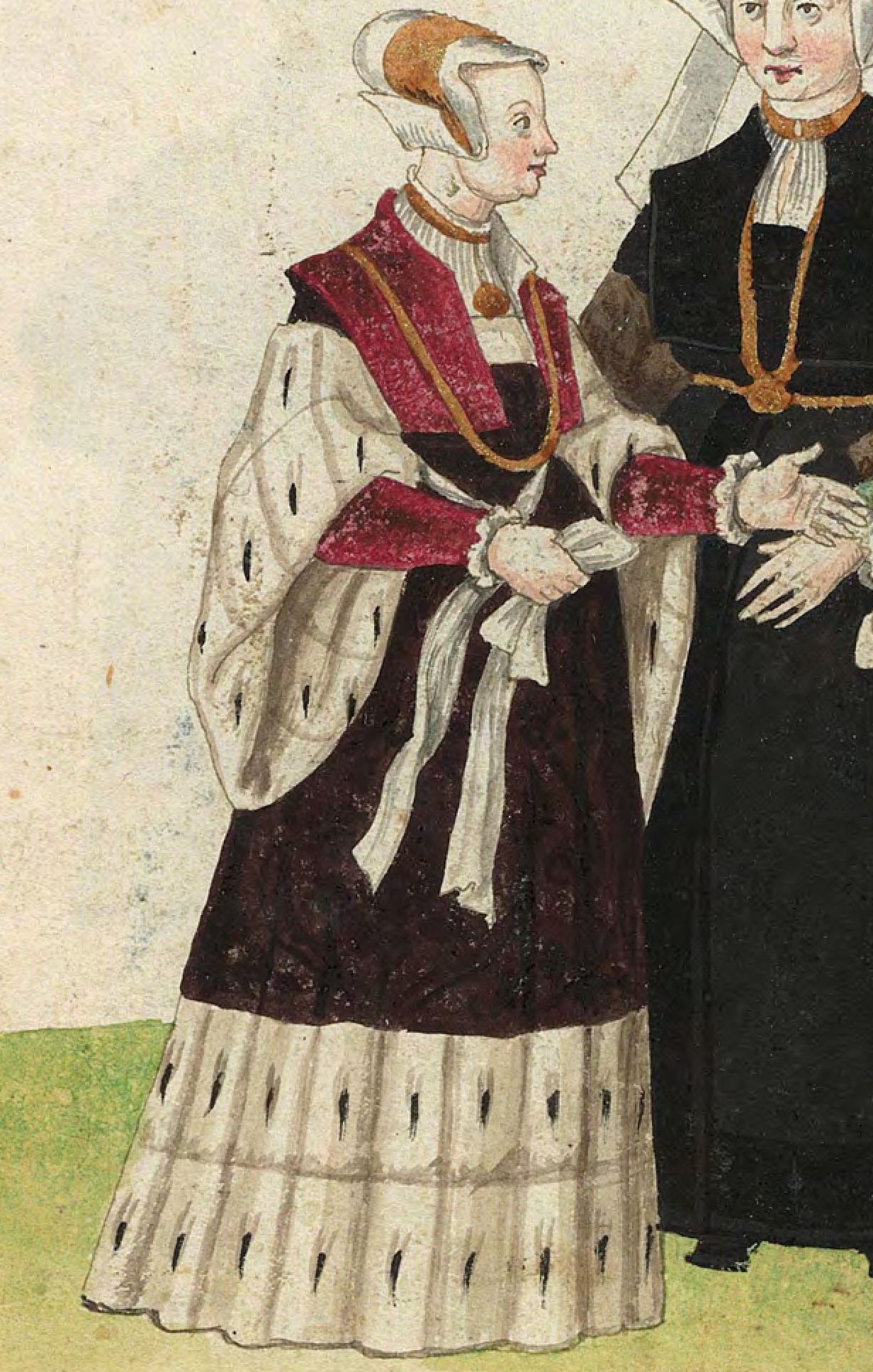
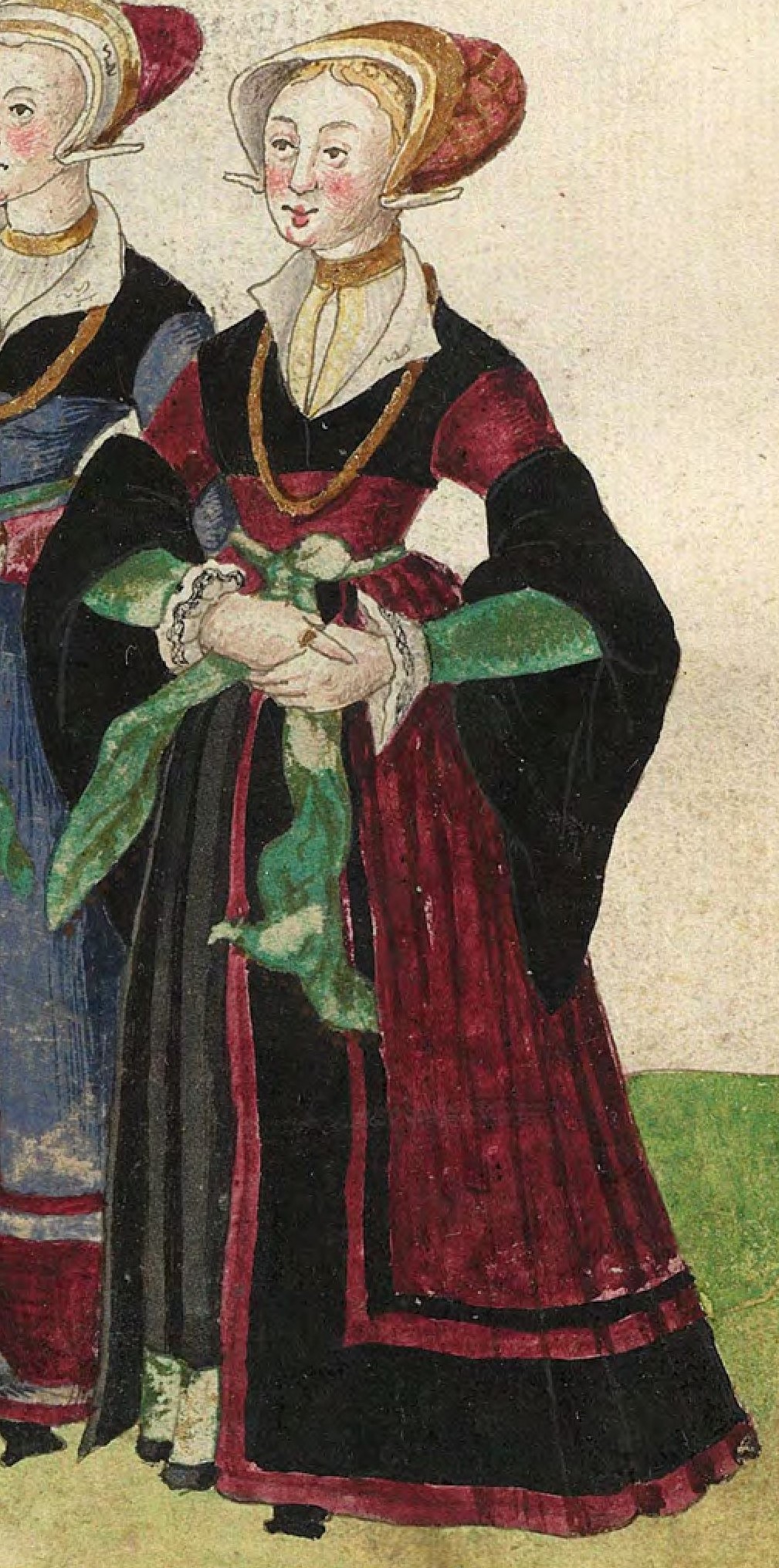
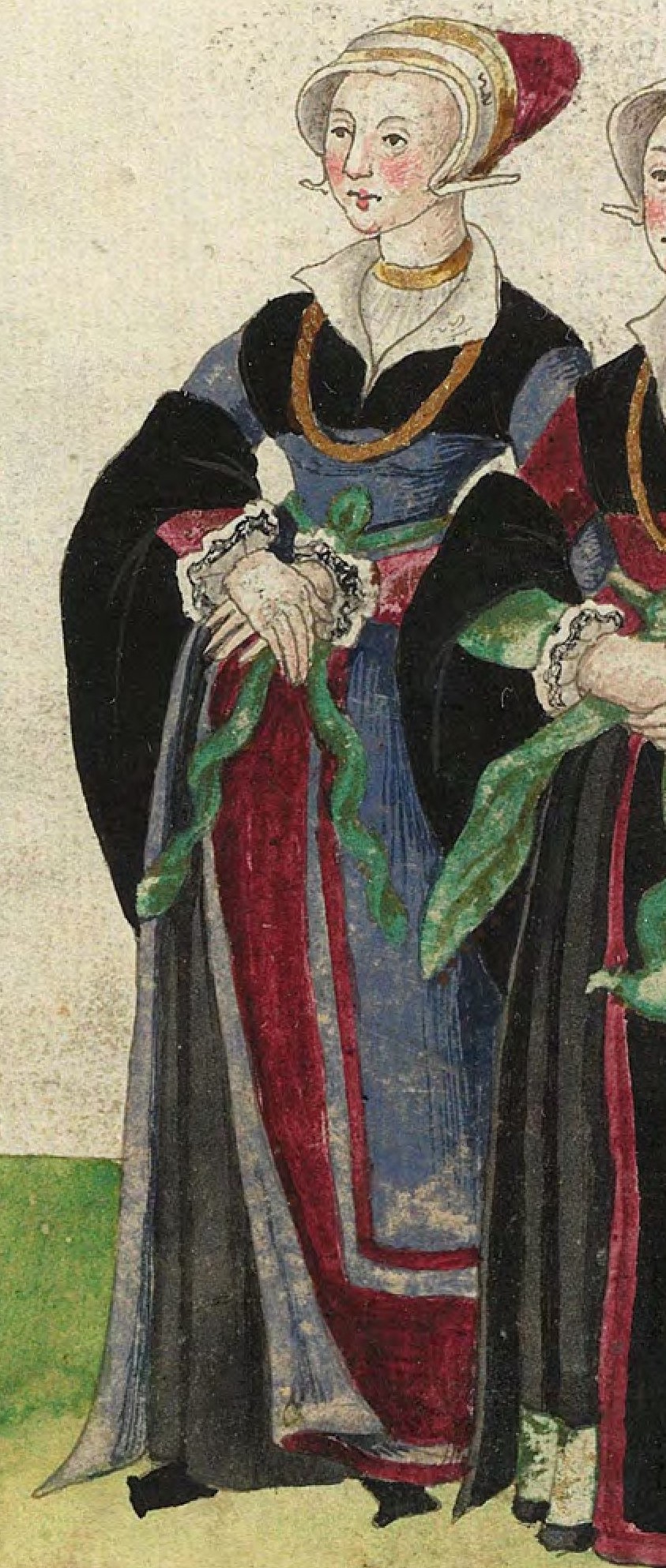
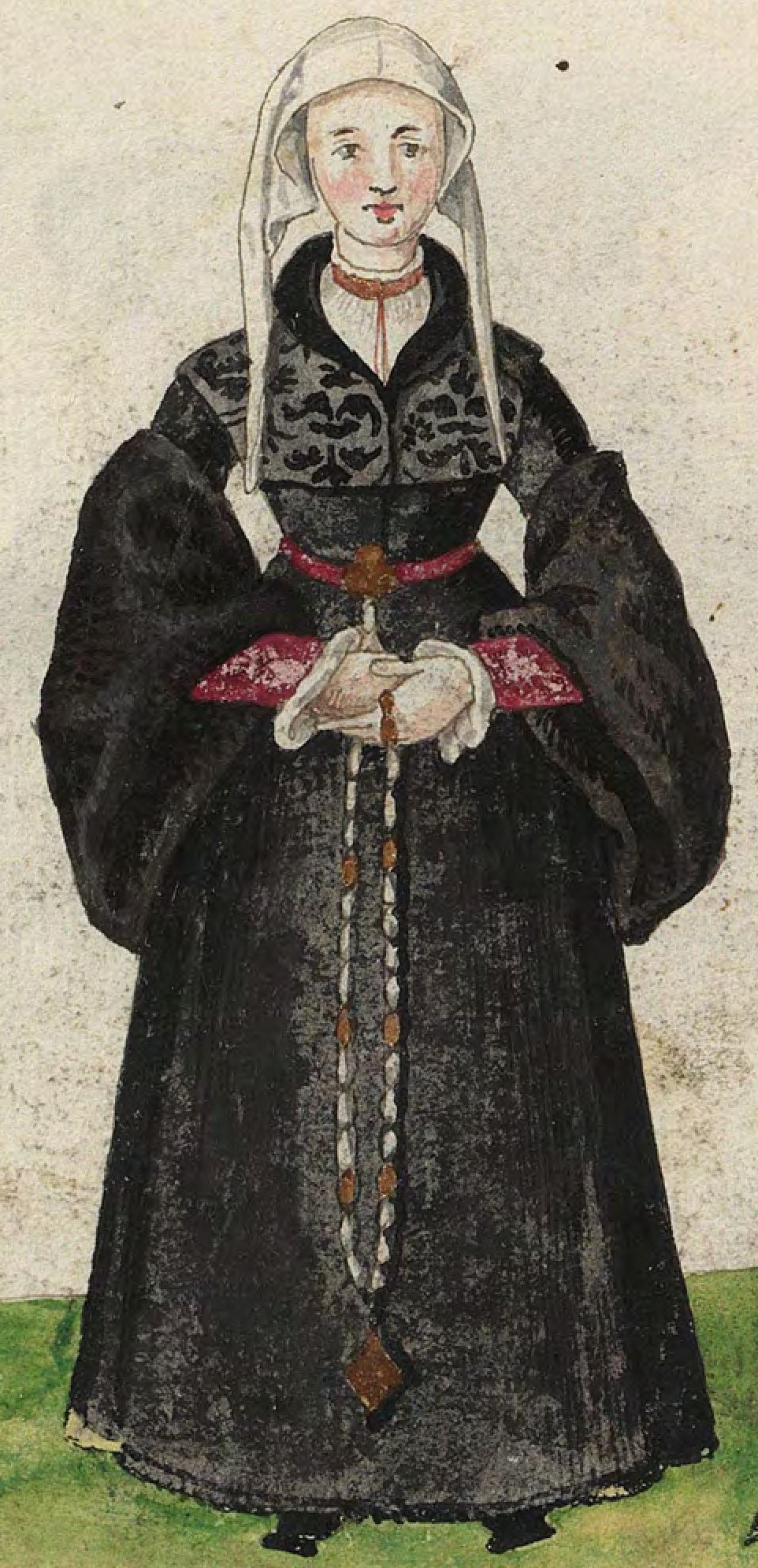
I have been trying to work out if the Codice de Trajes can be trusted for the figures of women from Juelich. These are a lot of figures with nearly the same dress and sleeve arrangement after all and this is not an arrangement we see in the Bruyn portraits of women of Cologne.
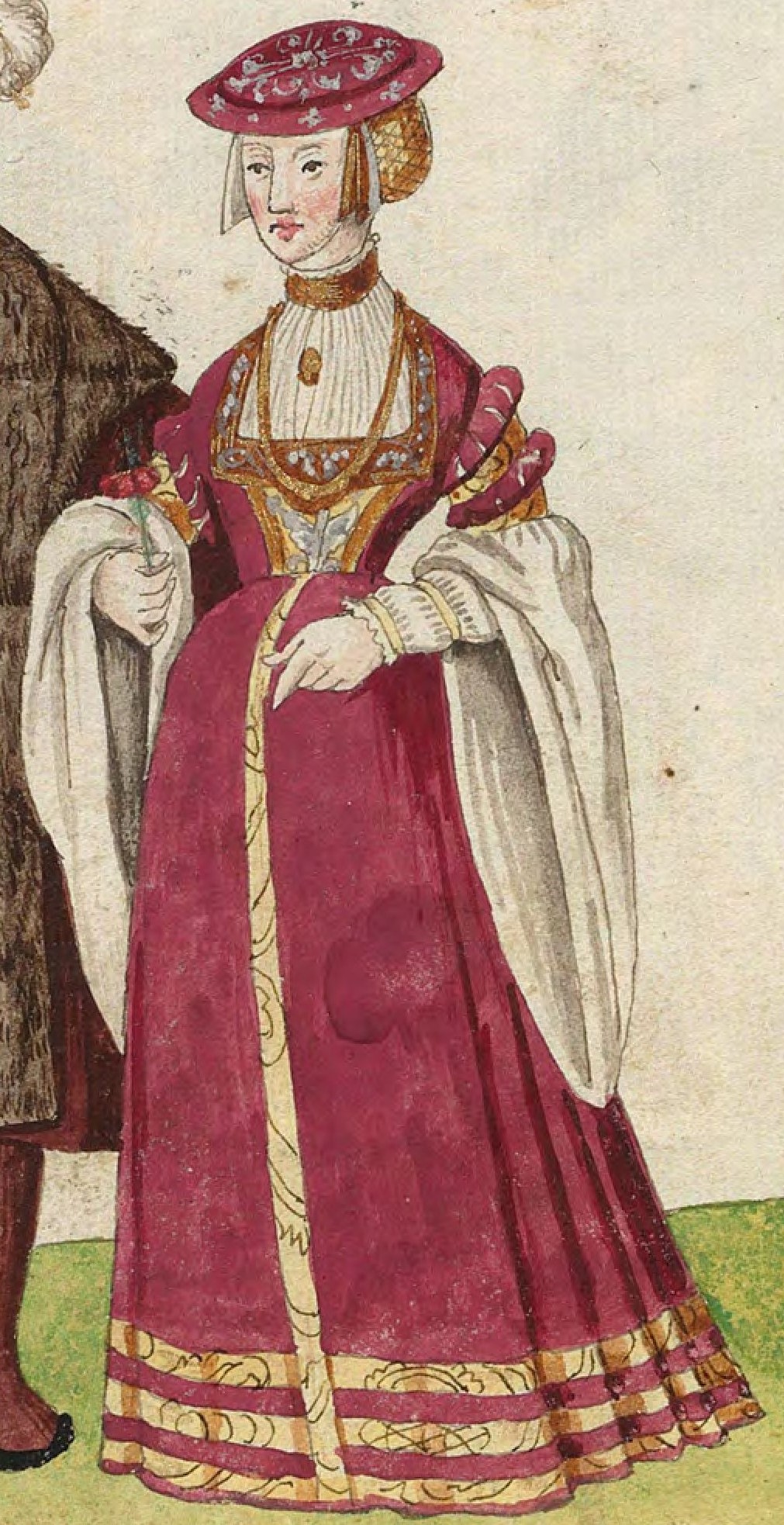
1540s Julich nobility. Fig. 1, plate 42v, Codice de trajes, Christoph Weiditz. BNE bdh0000052132
1540s Julich nobility. Fig. 3, plate 42v, Codice de trajes, Christoph Weiditz. BNE bdh0000052132
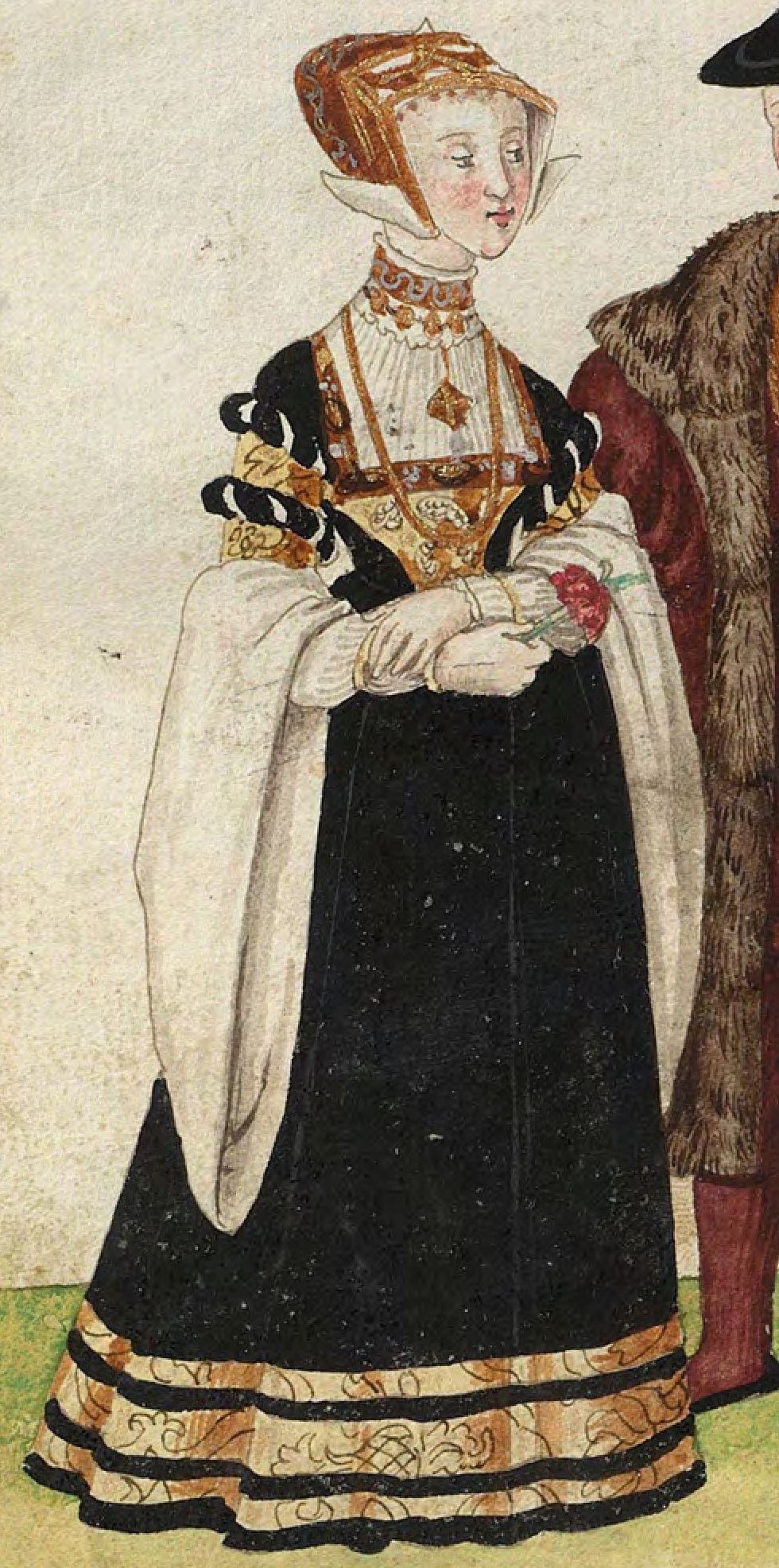
1540s Julich citizen. Fig. 1, plate 43r, Codice de trajes, Christoph Weiditz. BNE bdh0000052132
1540s Julich citizen. Fig. 3, plate 43r, Codice de trajes, Christoph Weiditz. BNE bdh0000052132
I decided to treat these images as if they are representative of what I haven’t seen before, after all the rest of the figures really do match very well to imagery we have of dress across Europe.
We have a wealth of portraits of wealthy citizens of Cologne and a few precious images of Anna and her family. And these fragments of information do support this position as there are marked differences in style while maintaining features iconic of the region.
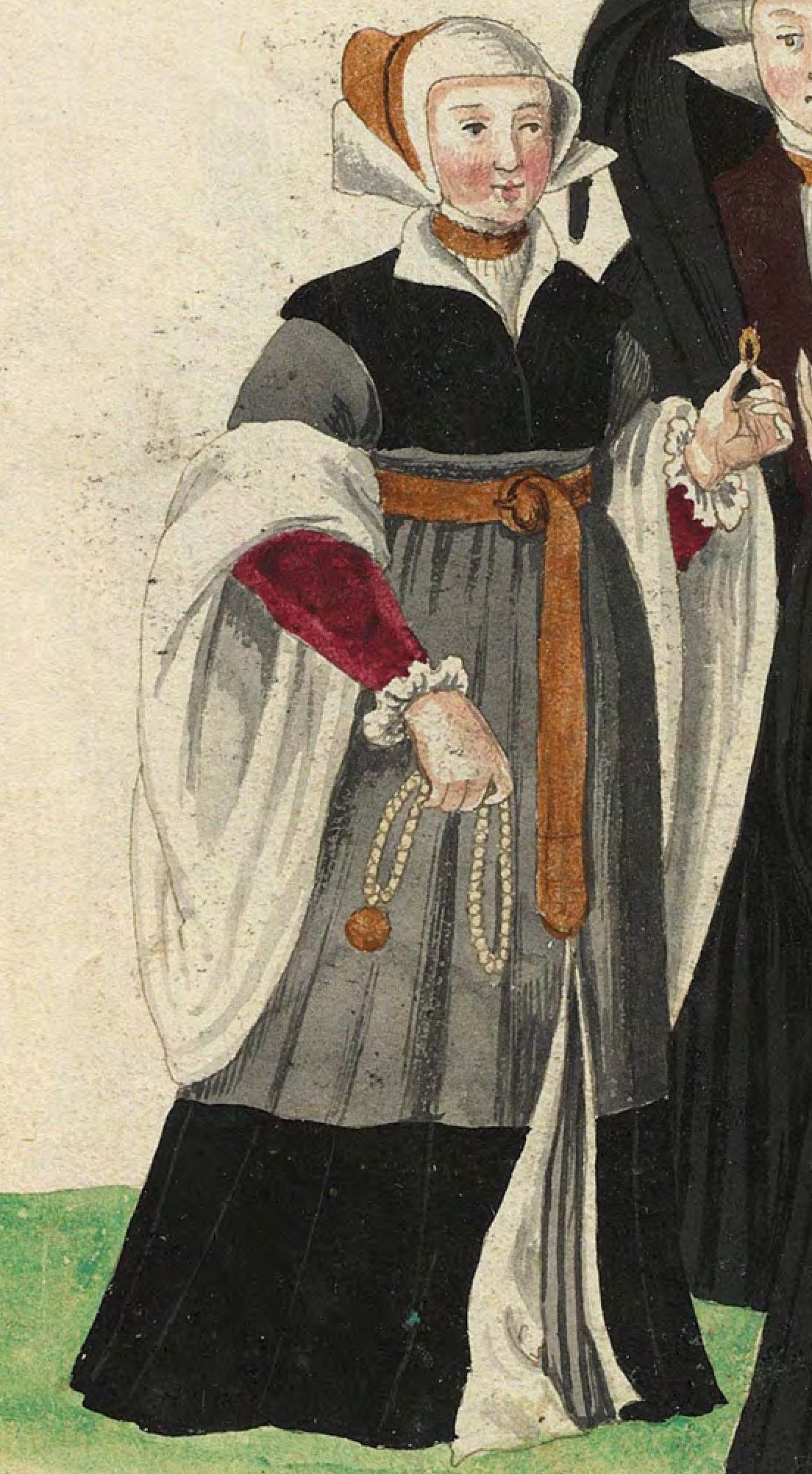
I am used to hanging sleeves of this region being made from the same fabric as the rest of the gown and lined in fur- and indeed even a very very fine fur that is often depicted as very delicate and very short and a very soft and thin skin- sometimes shown with the tails more often not. Sometimes these sleeves are pinned back and hide the outer.
However this is not what we see in the Juelich figures. And the Codies fortunately shows figures with sleeves of this arrangement to compare the treatment of this kind of turn back.
1540s Cologne Burger. Fig. 1, plate 45r, Codice de trajes, Christoph Weiditz. BNE bdh0000052132
1540s Cologne Burger. Fig. 1, plate 44r, Codice de trajes, Christoph Weiditz. BNE bdh0000052132
1540s Gelders nobility. Fig. 3, plate 33r, Codice de trajes, Christoph Weiditz. BNE bdh0000052132
1540s Gelders nobility. Fig. 2, plate 33r, Codice de trajes, Christoph Weiditz. BNE: bdh0000052132
1540s Gelders Burger. Fig. 1, plate 33v, Codice de trajes, Christoph Weiditz. BNE bdh0000052132
1540s Gelders Burger. Fig. 2, plate 33v, Codice de trajes, Christoph Weiditz. BNE bdh0000052132
In the Juelich figures we can see vertical gathers on the white hanging sleeve where it meets the fitted upper sleeve which does not indicate that the sleeves are pinned over.
I thought perhaps the way the book was created was from sketches Weiditz created during his travel and then he copied those into his book, thus maybe he did not take note of the colour of the hanging sleeves. His first book has been extensively studied but not this second so I am working with a lot of assumptions here!
I may be right, as the last figure (pink with black guards) is missing colour on her shoulder to our left. And the figure in yellow has some darker paint on her shoulder to our right which may indicate some trouble.
However this kind of separate soft and hanging sleeve is seen all over artwork of saints and allegorical figures and it does appear in different forms on portraits of women.
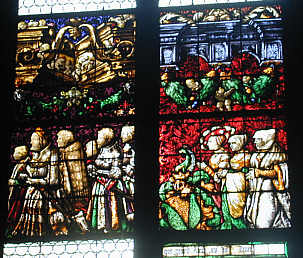
Freiburg, Münster, Stürzel Chapel, Stained Glass 1528 (Hans von Rapstein, Rappoltstein) after design by Hans Baldung Grien (copy, original in Augustinermuseum.)
These figures are not North Rhine but they are of the family of the founder of the Chapel. And the female figure in the middle of the right panel is wearing an example of the loose separate sleeve.
This is not conclusive obviously, however these sleeves are seen from the south to the north of the Rhine and so might be a kind of shared fashion.
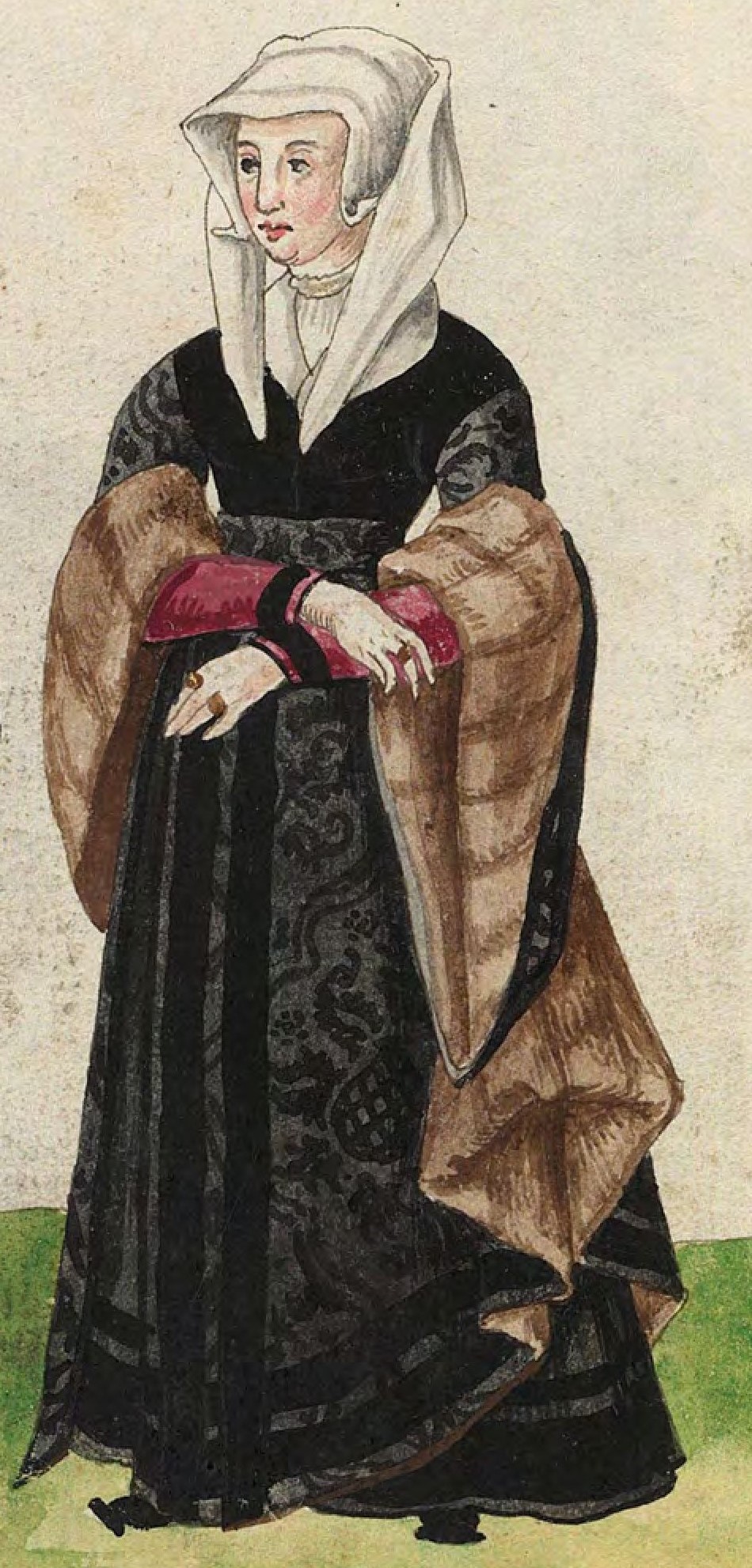
It is tempting to call these “stoichen” after a term used in Cologne inventories as this has been taken to mean a kind of pendant sleeve. I had originally thought perhaps they were matching sleeves as the de Bruyn costume book shows quitely clearly little fasteners on several loose sleeves that match the same sort of detail seen on fitted sleeves (though they look like thumb tacks not pins.) I suspect this is still a term for the type of sleeve even if not a separate item.
1581 Cleves. Fig. 1, page 17, Omnium pene Europae, Asiae, Aphricae, Americae gentium habitus […] de Bruyn. Rijsmuseum BI-1895-3811
1581 Cologne, unmarried woman. Fig. 3, page 16, Omnium pene Europae, Asiae, Aphricae, Americae gentium habitus […] de Bruyn. Rijsmuseum BI-1895-3811
1581 Aachen, unmarried girl. Fig. 9, page 18, Omnium pene Europae, Asiae, Aphricae, Americae gentium habitus […] de Bruyn. Rijsmuseum BI-1895-3811
1581 Cologne, bride. Fig. 2, page 11, Omnium pene Europae, Asiae, Aphricae, Americae gentium habitus […] de Bruyn. Rijsmuseum BI-1895-3811
1581 Cleves, unmarried woman. Fig. 3, page 17, Omnium pene Europae, Asiae, Aphricae, Americae gentium habitus […] de Bruyn. Rijsmuseum BI-1895-3811
1581 Cleves. Fig. 2, page 17, Omnium pene Europae, Asiae, Aphricae, Americae gentium habitus […] de Bruyn. Rijsmuseum BI-1895-3811
But here we do see that a short half length sleeve not only was in fashion in the later half of the century but also it does make for a very versatile garment. Sumptuary laws clearly show that the accessories were a very strong indicator of rank and so were very important. By alternating accessories and wearing the skirt open or closed the one dress can be worn in many ways.
Short half sleeves can also be seen in paintings. The earliest I’ve found is on a child before 1550 and then on adults after this date. These all are puffed not fitted.
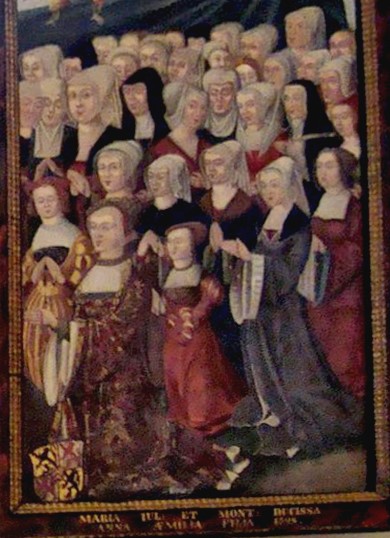
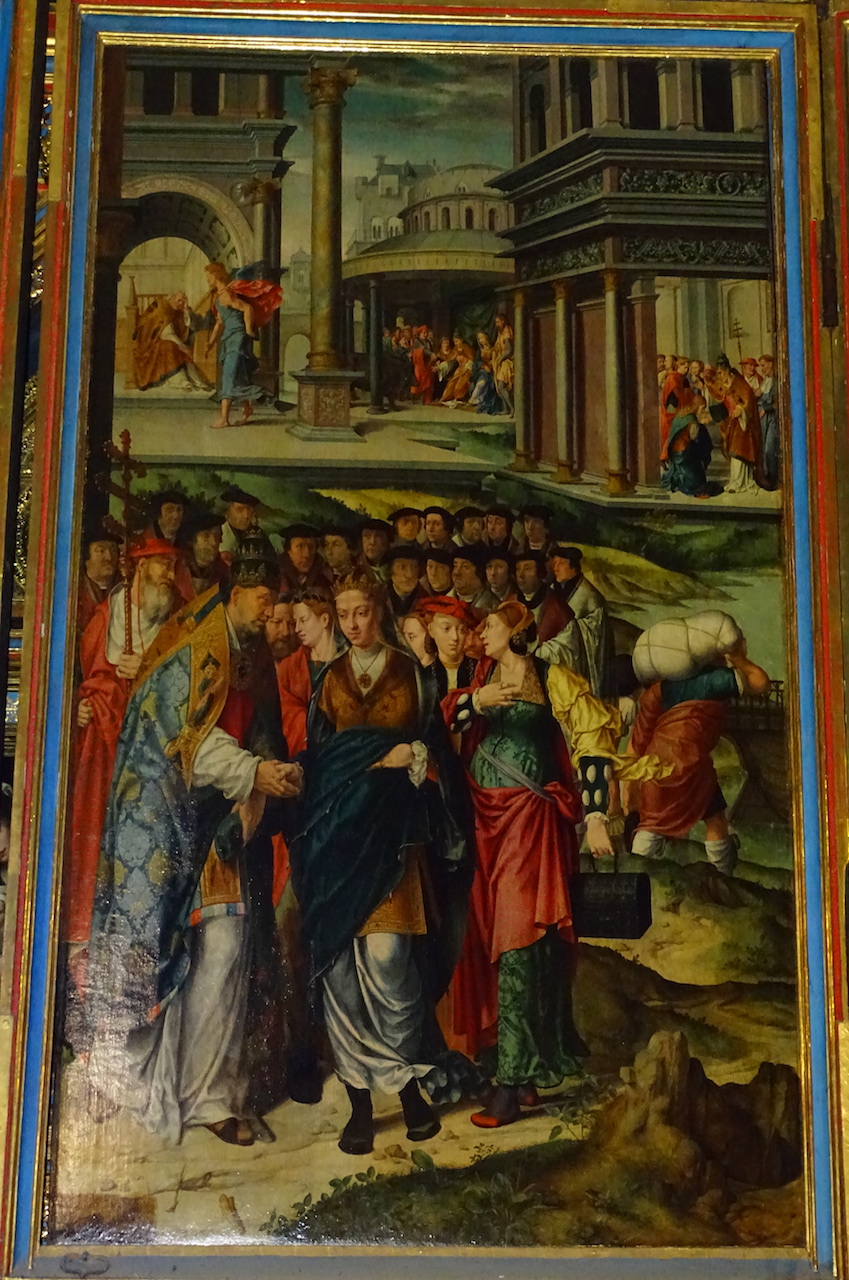
But what of the paned sleeves? These are seen on both figures of Anna and Amela in the triptych of their family, while the rest of their court ladies have loose sleeves.
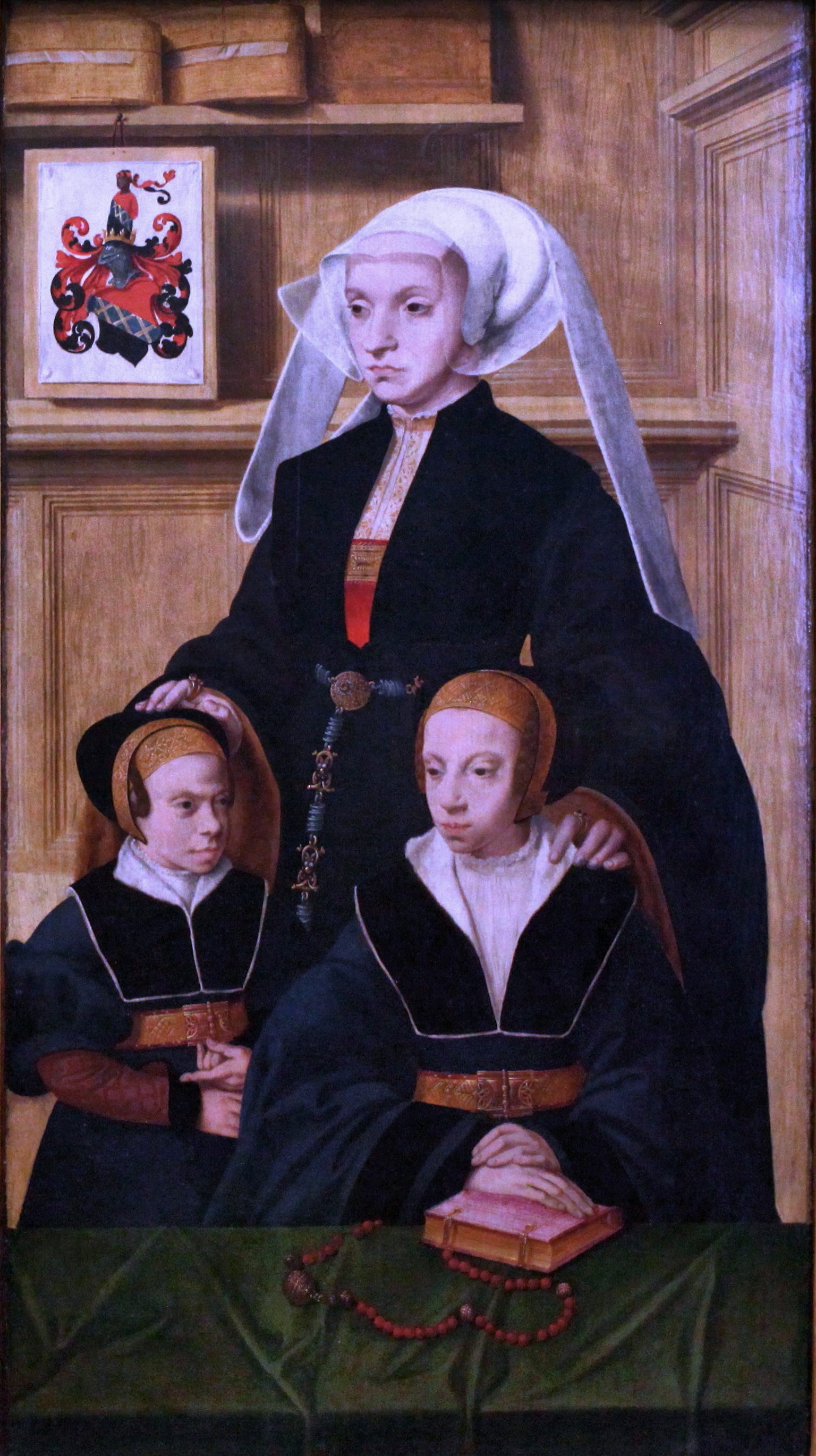
Anna, Maria and Amalia
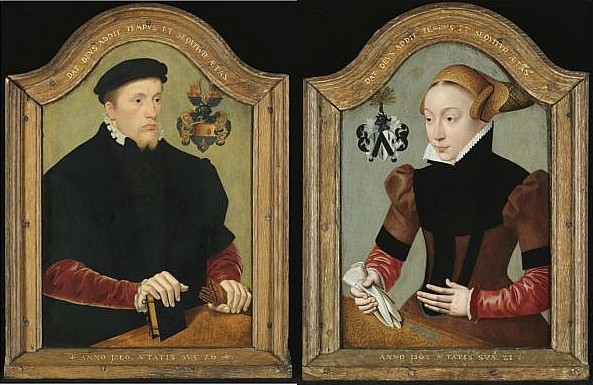
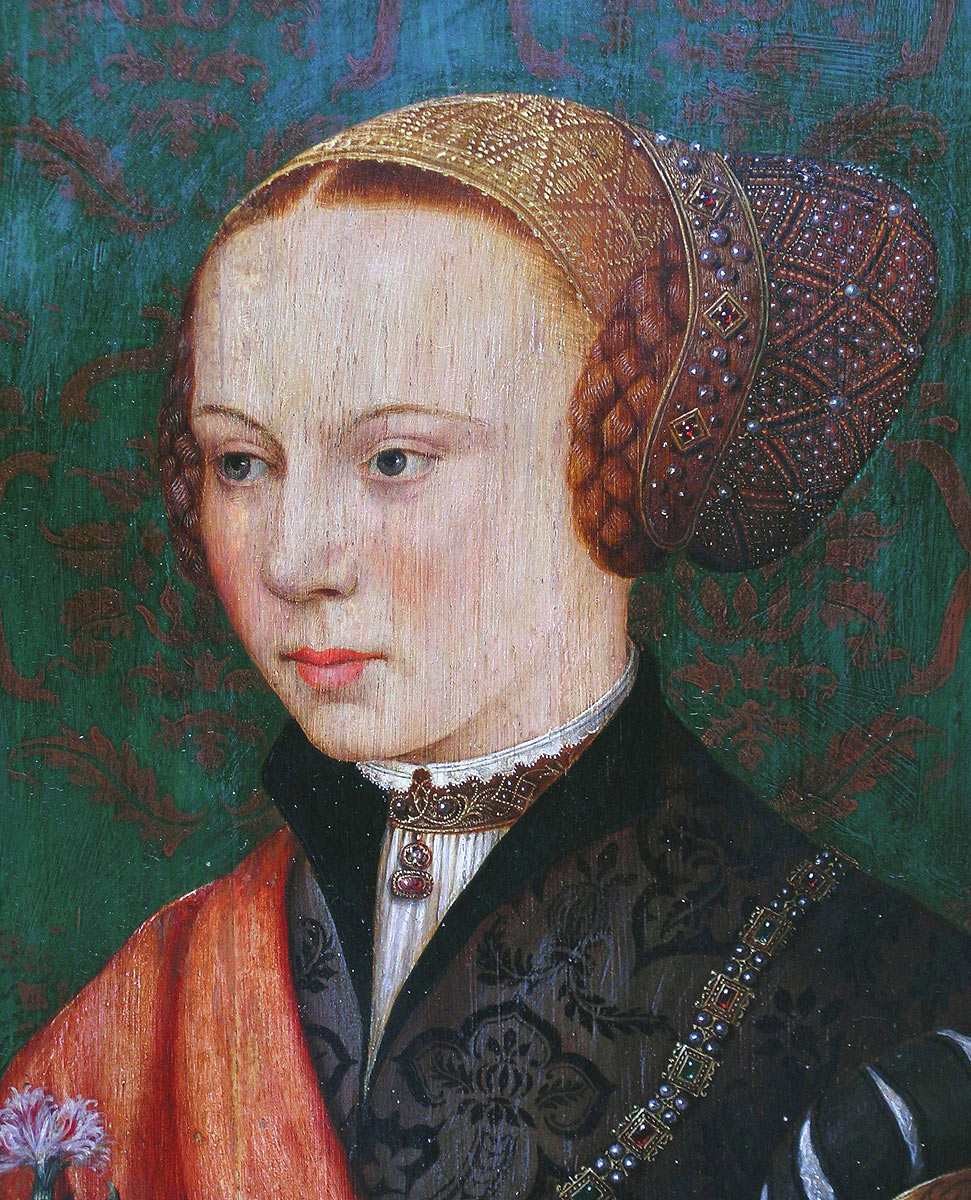
This last portrait is frustratingly difficult to find the original. It was part of an auction on a site that no longer hosts the originals nor any information about the auction, and this is a zoomed view. But there is a very clear paned upper sleeve seen here. This is from a pair of portraits thought to be by the Bruyn workshop. They may have been restored or they may be copies as they do not have the same softness of features.
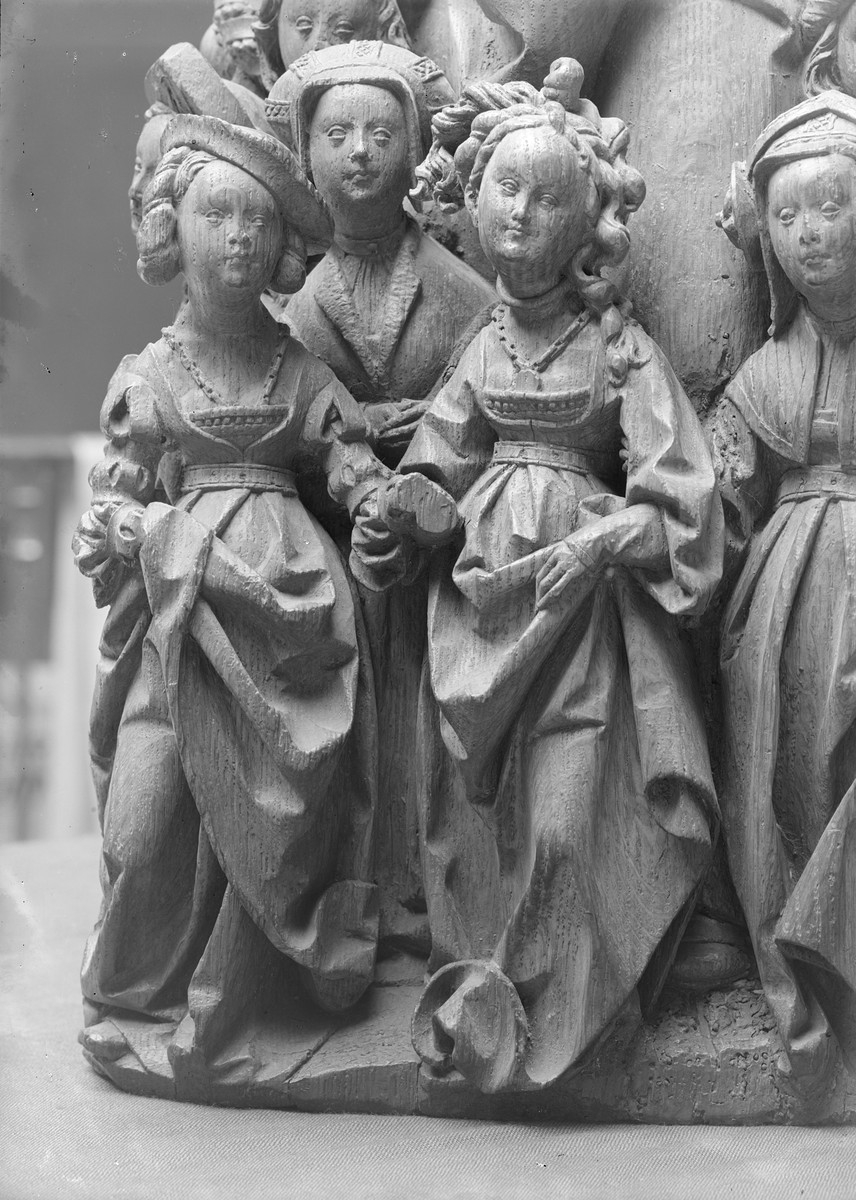
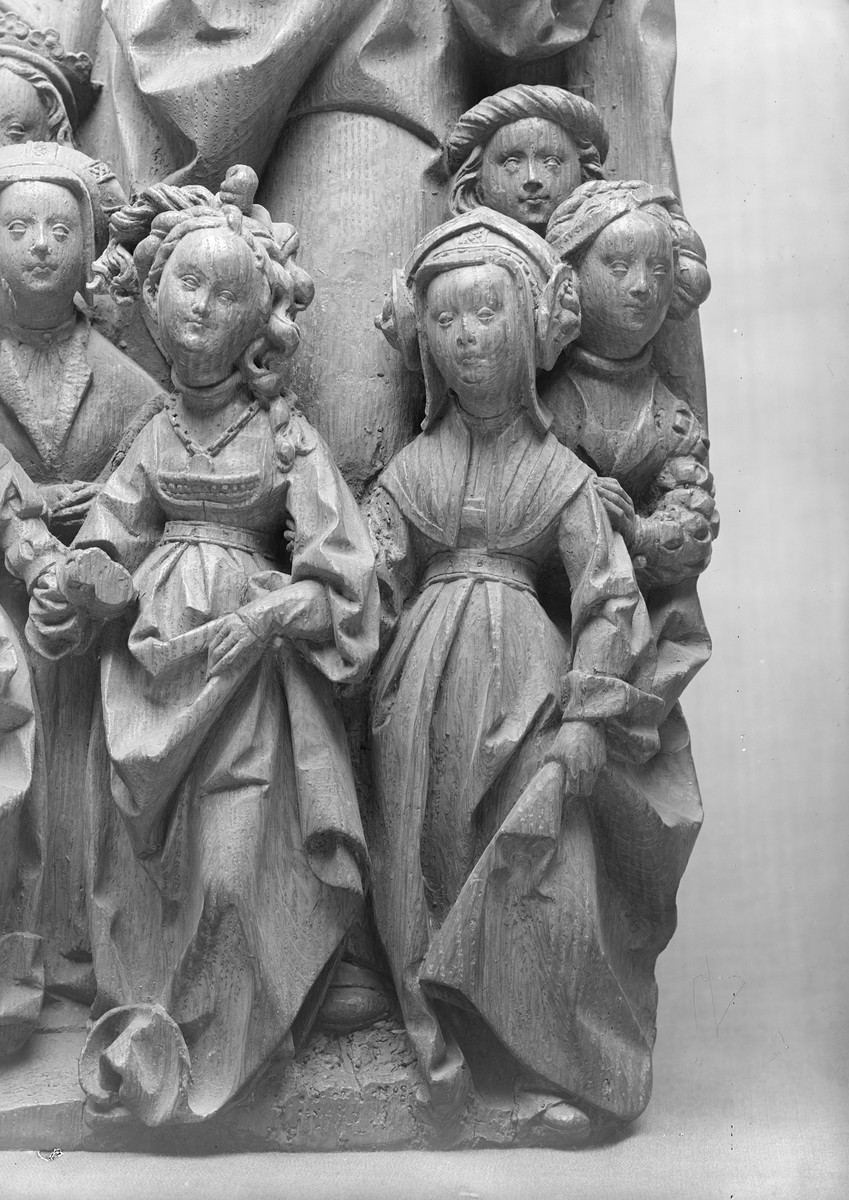
The half length paned sleeve is seen in allegorical and religious figures especially in sculpture.
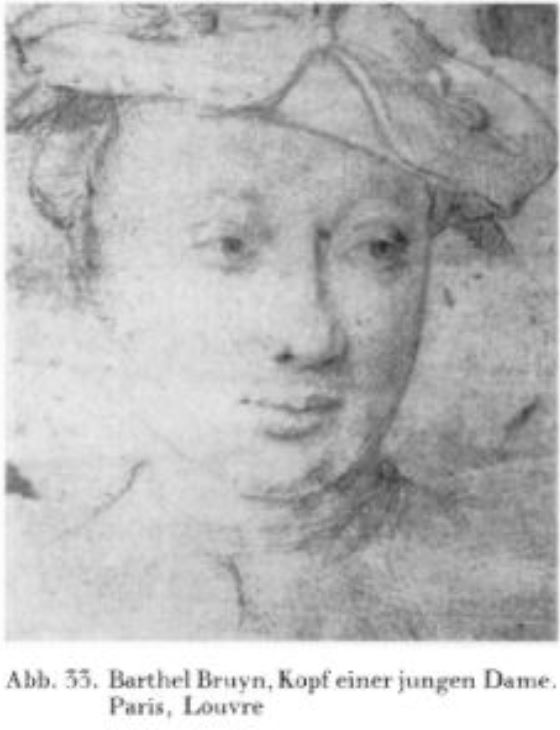
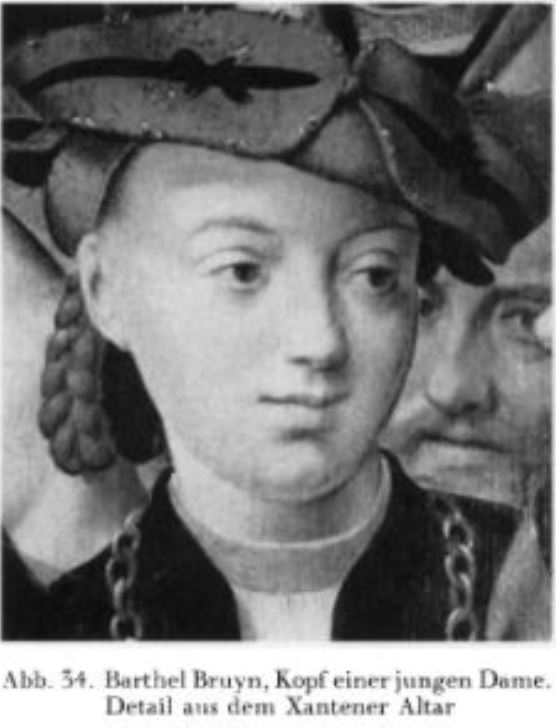
Of special note is the figure on the far left as she has the same style of hat Anne wears in the triptych. A different kind of cap is also seen on a portrait of the Countess Emeza von Kappenberg as a sketch and detail of the Xantener altar.
The figure to the right of the group of three even has sleeves quite similar to the portrait of Maria (the mother of Sibylla, Anna, and Amalia.)
On balance it does seem more likely that Weiditz had access to images or people that are no longer represented clearly in the art we can easily access now. However elements of the style can be found both within the North Rhine and outside.
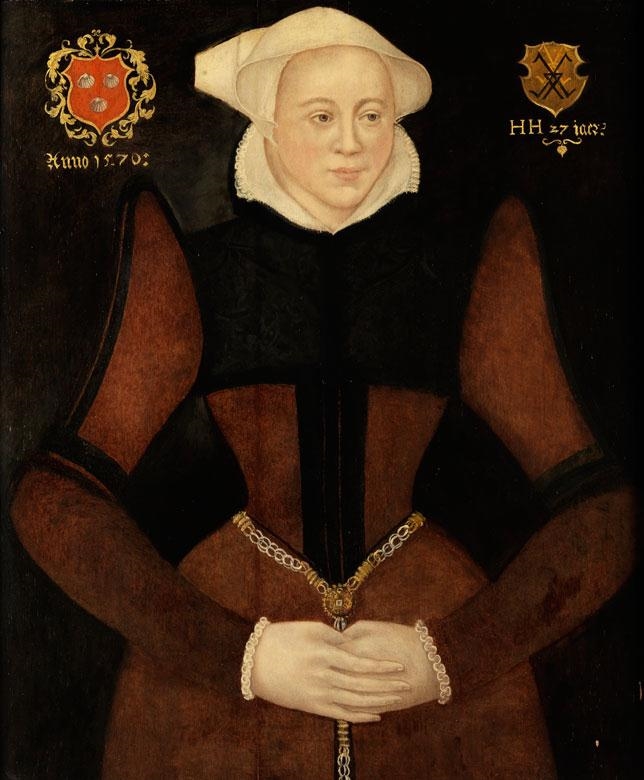
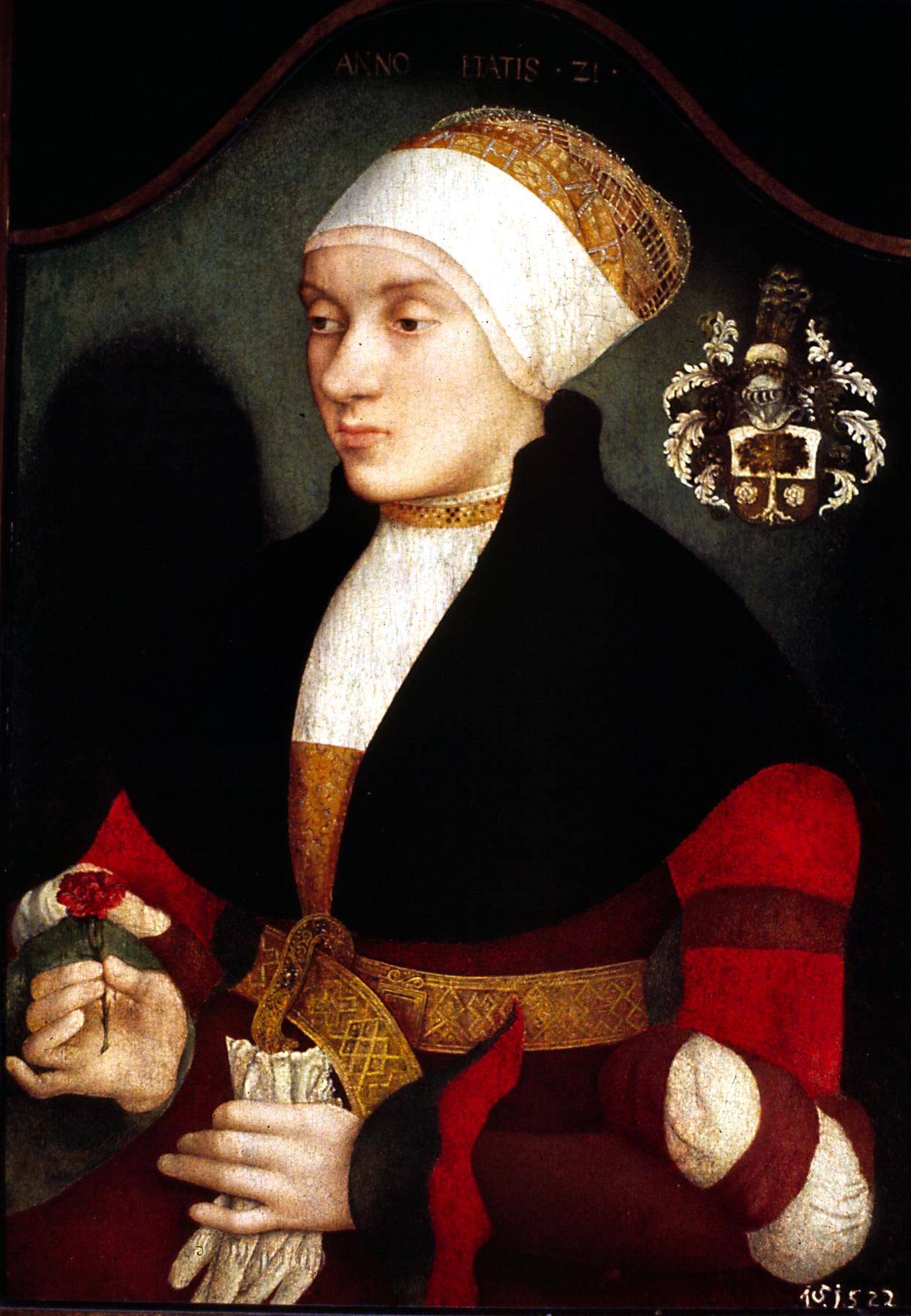
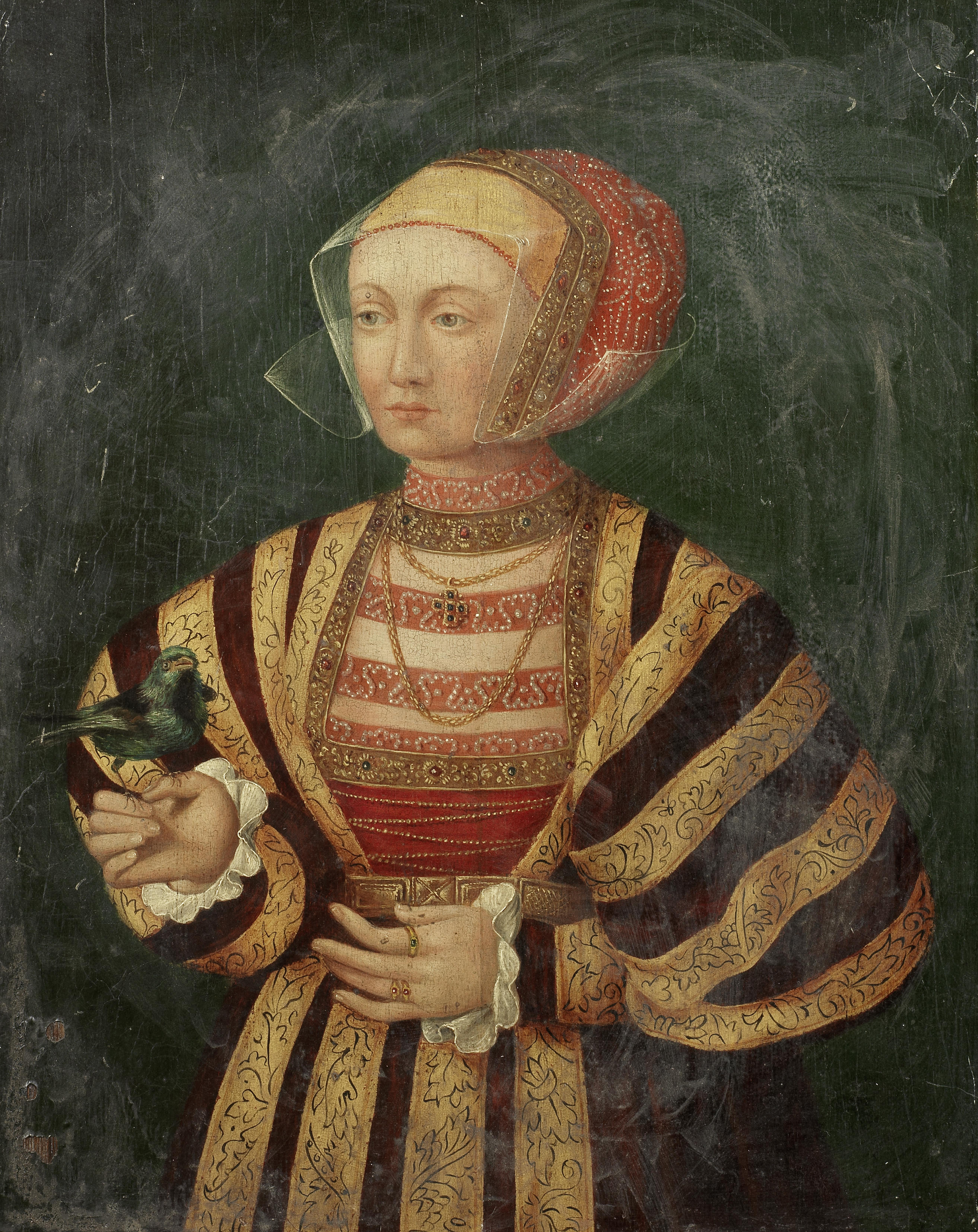
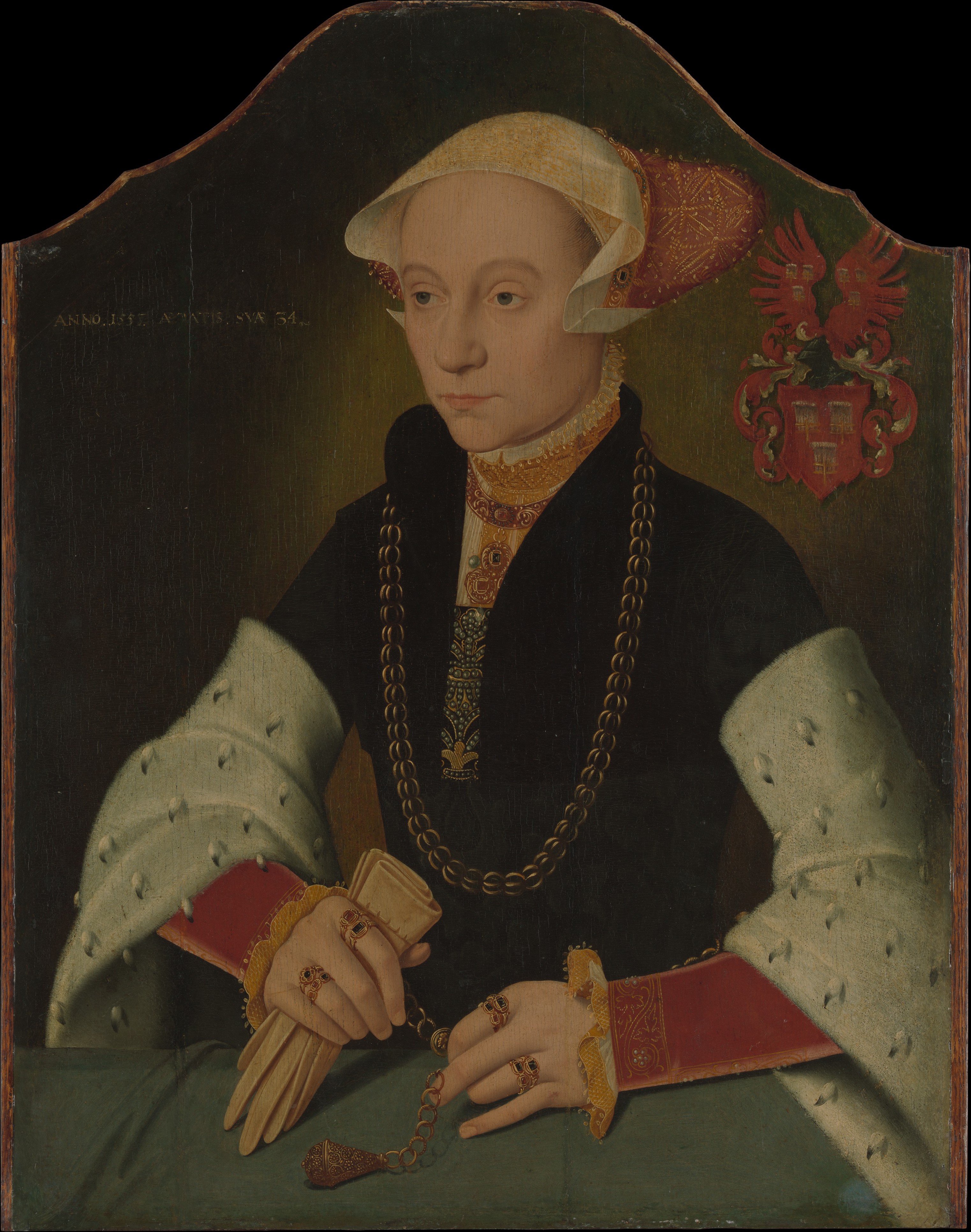
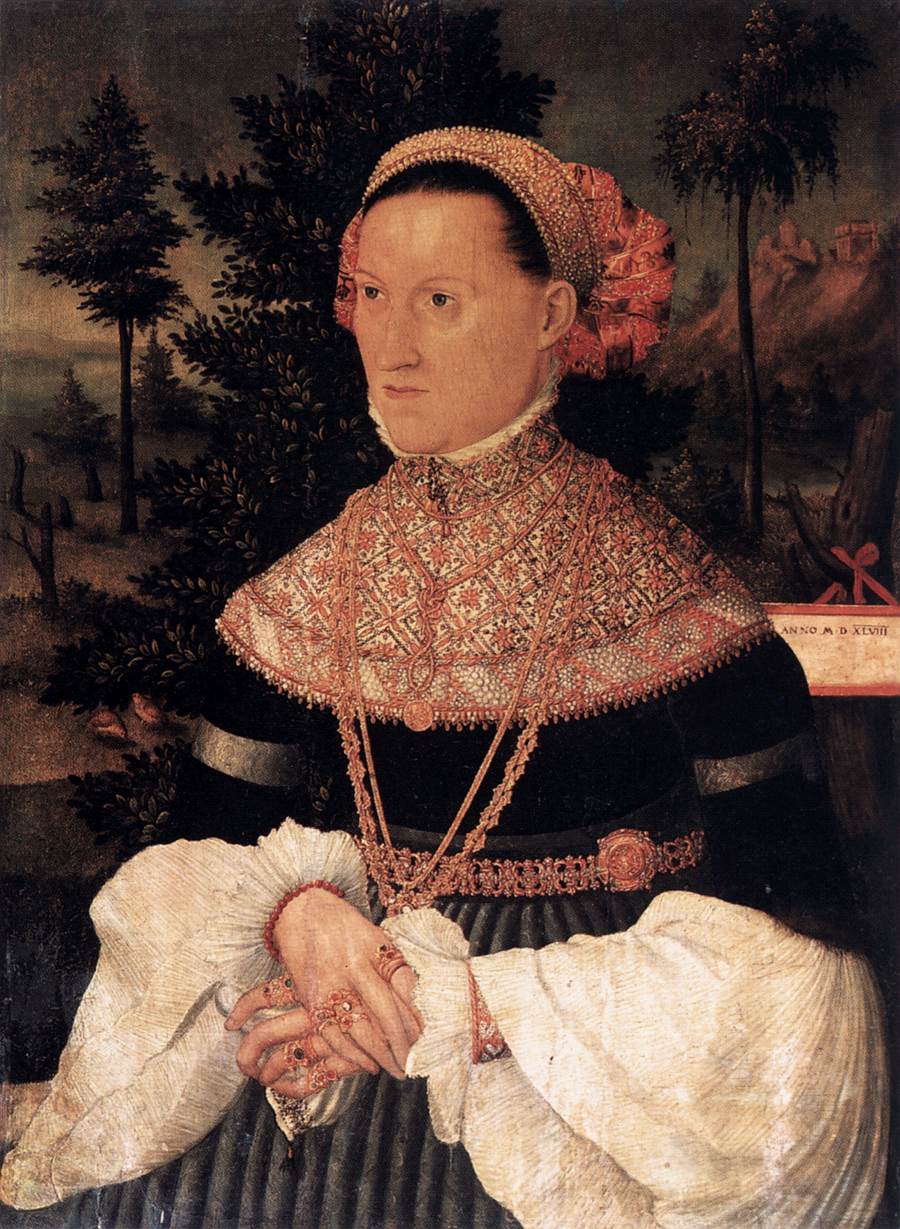
This painting has always been a bit of a mystery to me. It really does look like the work of Bruyn, her face especially but her dress does not look entirely as expected from Cologne, but it does not mean it isn’t North Rhine.
Last year the painting was taken out of storage to be studied. So far fake aging has been identified as well as an understanding that the crest was added in the 19thC.
I’ll be interested to know to what extent her clothing has been altered, one element rings as untrue and that is the cuff. Not for being rather flamboyant but how the red has been treated- I suspect it is the other side of the cuff but might have been repainted over the wrist as it it was decoration.
The paned sleeve is also seen in the Weidtz costume book and on the triptych on the figure of Amalia. But the specific style is straight from several Tom Ring portraits of women in the second half of the 16thC.
Interestingly while we are very familiar with the style of hat worn by Anne of Cleves I do have several instances of headgear that is very different.
Right now I am backtracking all my image references to group by date. So this is going to be a bit of a project but it is happening. This post has been brought to you by this search. I have a folder of a 215 images still to date, not including all the bildindex images that also need dates added.
But there will be a page on hats. Because they are extremely misunderstood. There are several forms and how they came about is very fun to track.
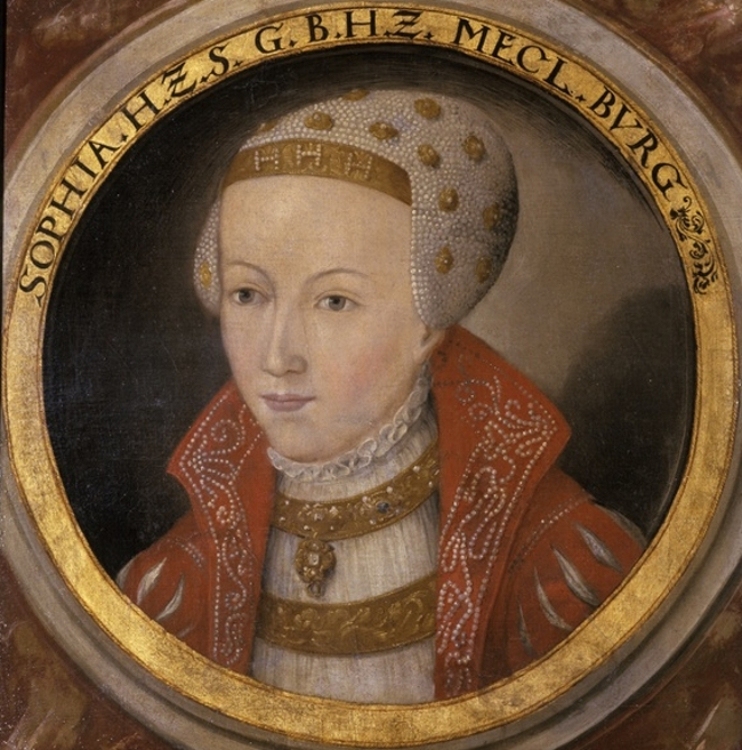
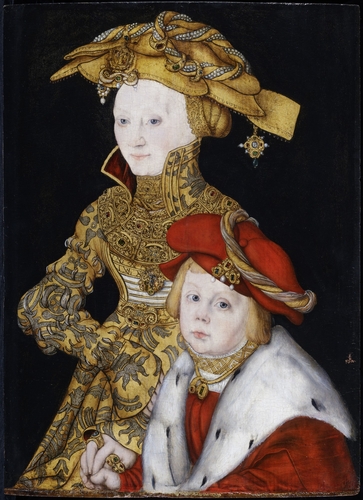
In my previous post I looked at a possible portrait of Sibylla of Cleves and her son, which has been copied and also called Sophia of Mecklenberg. So that lead me down another series of mixed identities that has a little bearing on
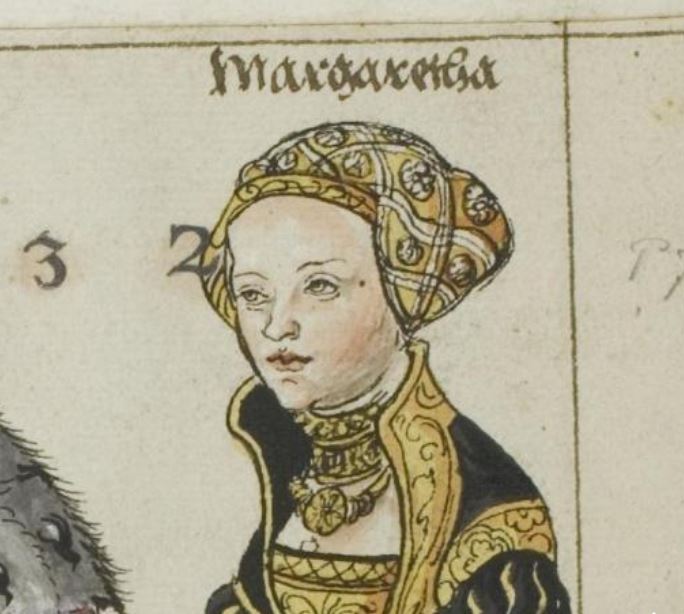
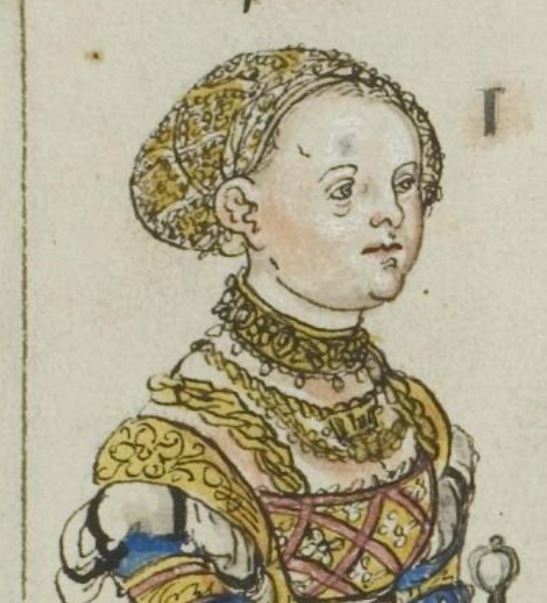
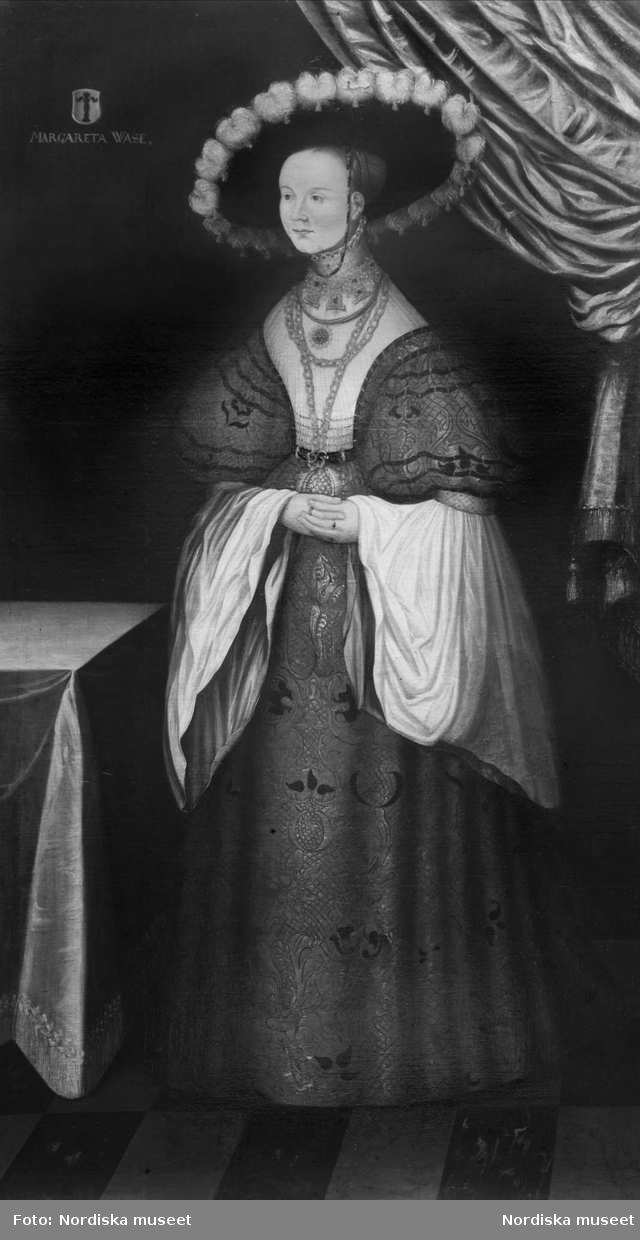
So far so interesting, however K. Barich has found her also in the Cranach illustrated Stammbuch as Margaret von Anhalt (1494-1521) as the second wife of Johan, after Sophia.
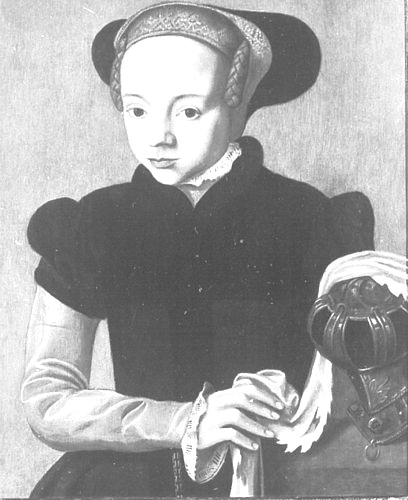
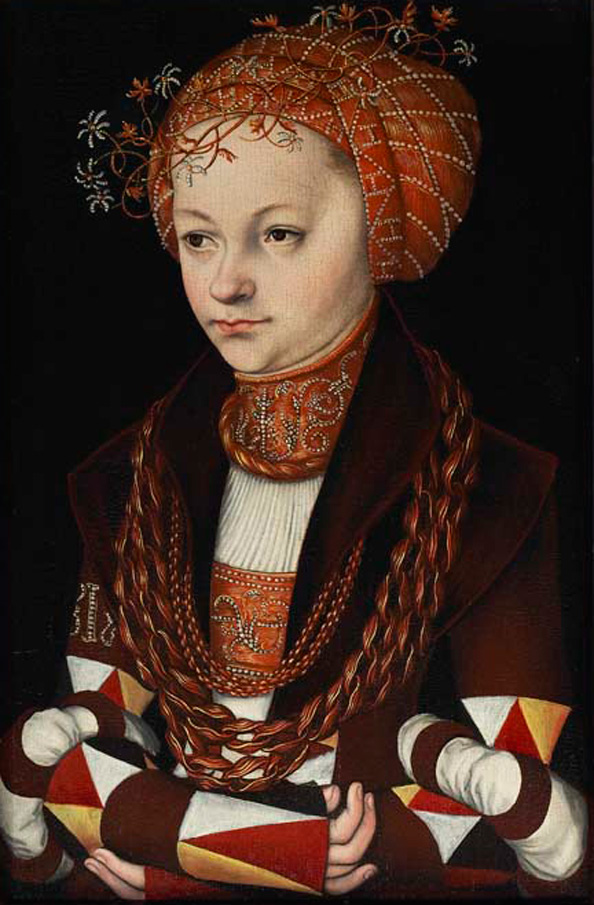
So far so interesting but it does suggest the headdress is in fact Saxon. Which is also similar to the shape in this portrait of an unmarried girl by Lucas Cranach with the same general shape and the letter H again.
All of which means being careful with copies and even with attributing original works as sometimes personal taste in clothing can transcend regional fashions. This is certainly true of much of the history of dress.
I spent a day yesterday gathering archival resources (I have multiple copies due to multiple scans and I really need to get them nice and tidied, it’s taking a while as you can imagine, but I found an entire class of sumptuary laws in plain sight so I’ll be transcribing that asap even though it’s literally for one city)
But I was thinking how helpful the straight transcriptions of written texts into printed have been, even if I can’t be 100% sure they are strictly accurate- see the gepend/stickelchen post.)
In this I have tried to share only paintings/illustrations from the 16thC. But that may be a bit shortsighted. I have only shared copies that look to be at least of the era. But there is at least one 19thC copy of the Bruyn portrait of Anna which happens to be by an artist who has produced paintings of people of the 16thC that we haven’t attributed as copies.
This is clearly a copy of a copy- there is no flat cap, there are four guards on her skirt, the stickelsche is not smooth. Details for a future comparison. This is a fantastic obvious copy as we have so many original copies to compare it to.
However this is not the only member of the the House of Mark to be painted by him. There is a reasonably well known portrait apparently of Sibylla after her marriage and with her son.
As a potential copy of a real painting this is very interesting and at the same time quite frustrating. Apparently there are 40 copies of this one painting by Rohrich but there is an original Cranach recently verified:
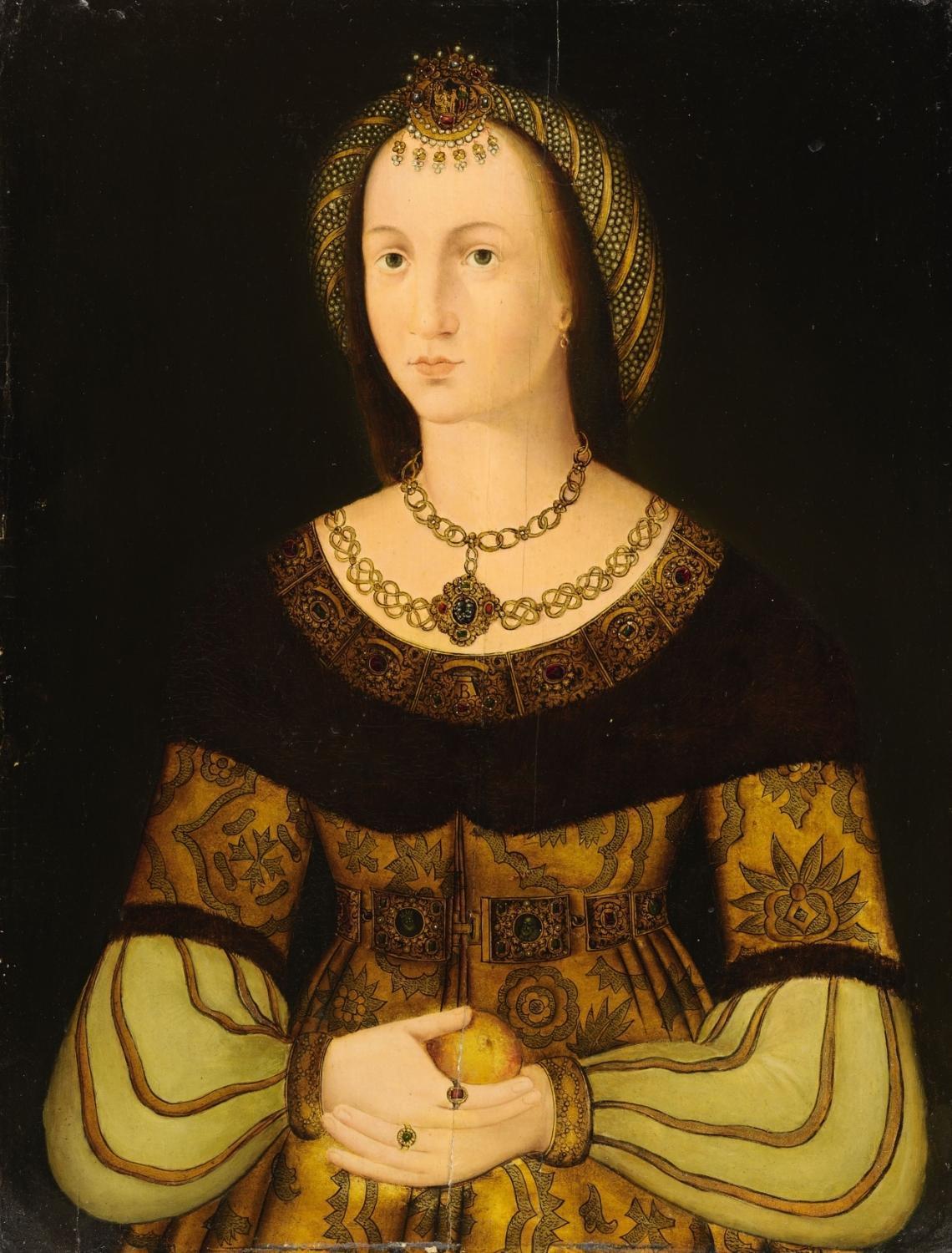
However it does bring us to another portrait by Rohrich attributed as Sibylla of Cleves, potentially before her marriage. And it’s very tempting to suppose it might be from a no longer existing portrait given the previous portrait is indeed a close copy. So very close. There is also another copy of the portrait suggesting it is of Sophia of Mecklenburg:
This seems unlikely as Sophia appears to have died in childbirth or the same year as her son was born. His father also married Margareta of Anhalt and she also died the year her only surviving son was born. Generally portraits of parent and child are of direct relationship.
Looking closely at the Windsor Castle painting, the face is a little less pointed than would be expected as he painted her so many times.
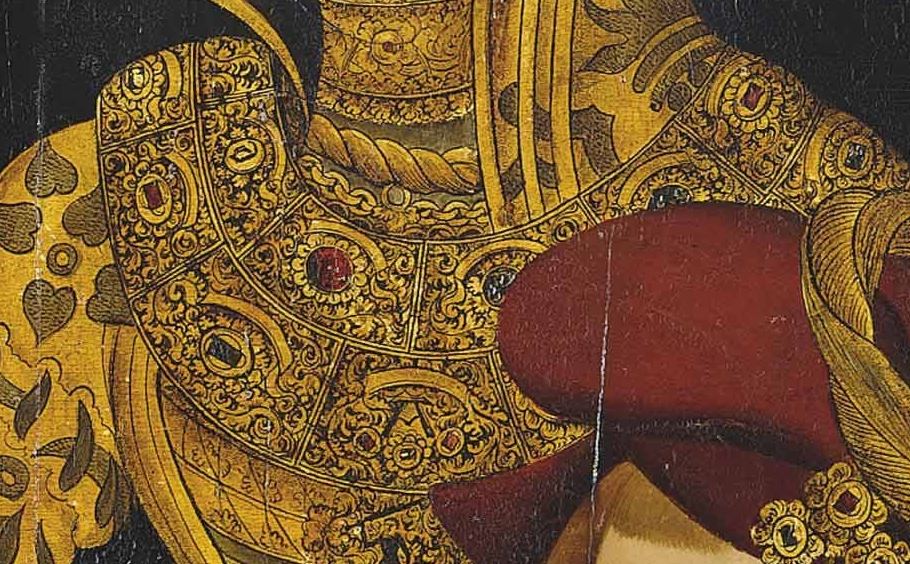
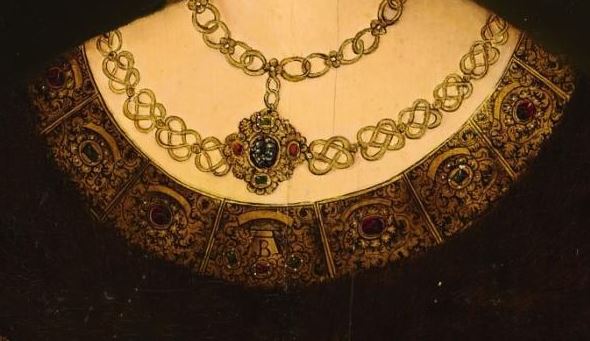
Either way this next sole portrait is quite clearly related to this copy or original portrait in at least two ways. The central pleats of the gowns and the wide collar of jewels.
The lower jeweled collar matches his own other portrait to a degree that cannot be escaped.
I have had a small copy of this as part of my old Frazzled Frau site and have not seriously considered it as part of this region before. The striped under sleeves just feel more southern, the dropped hairline and headdress. I still need to share a timeline but the stickelsche has roots in a henin style supported hat, not a haube so in fact started very high and slowly dropped to the sides over the 16thC.
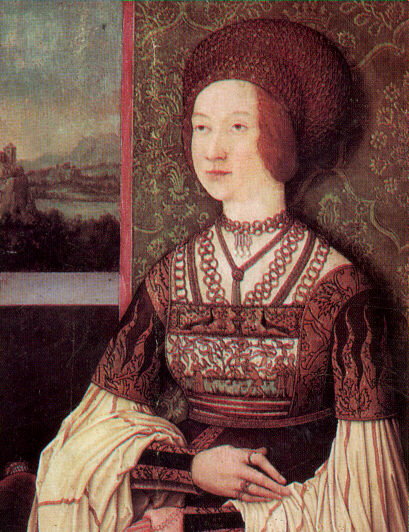
Details that do make this tantilising are the half length sleeves (so very iconic of the Weiditz codex and the stained glass portrait of Maria) the decorated belt at the natural waist, even the very deep collar (not goller) can be found in late gothic art of the North Rhine. This would however date to the 1490s which is when Anna, Sibylla, and Amalia’s mother was born.
It is also unclear if Rohrich recognised the portrait he copied or if he assumed who the sitters were.
And all this leads back to the interesting clothing connections between the North Rhine and Mecklenburg. For a second post. To follow immediately.
As per the facebook announcement Marion McNealy has produced another book this time of embroidery books. This is of special importance, for me, for several reasons.
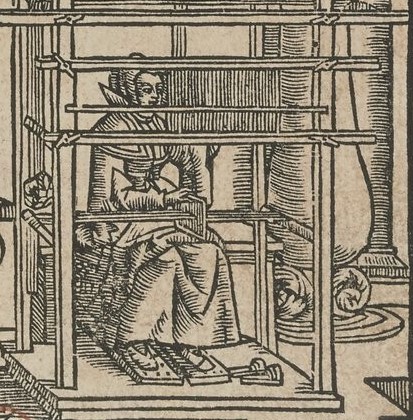
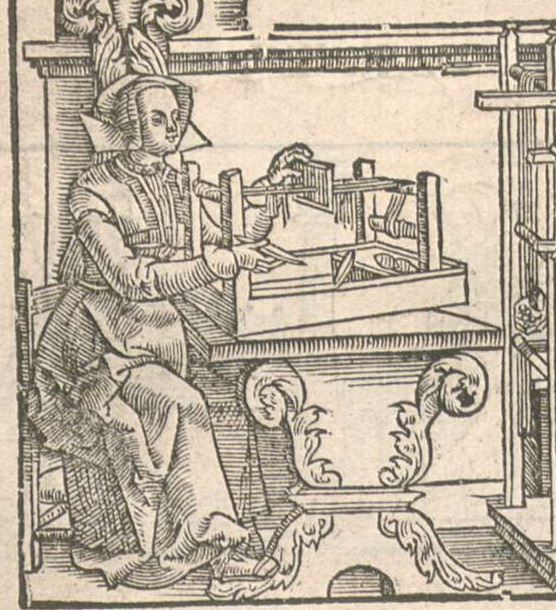
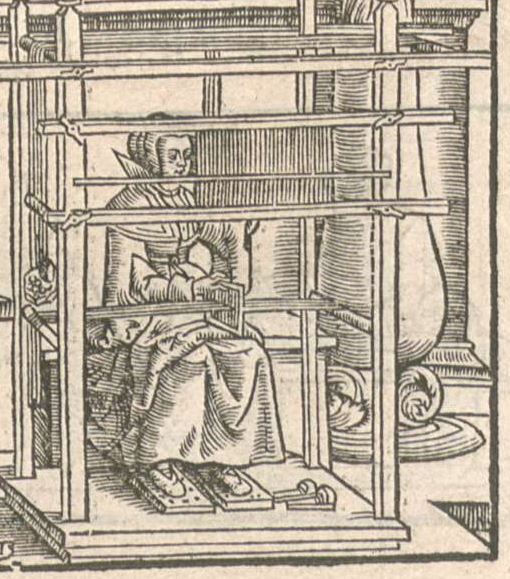
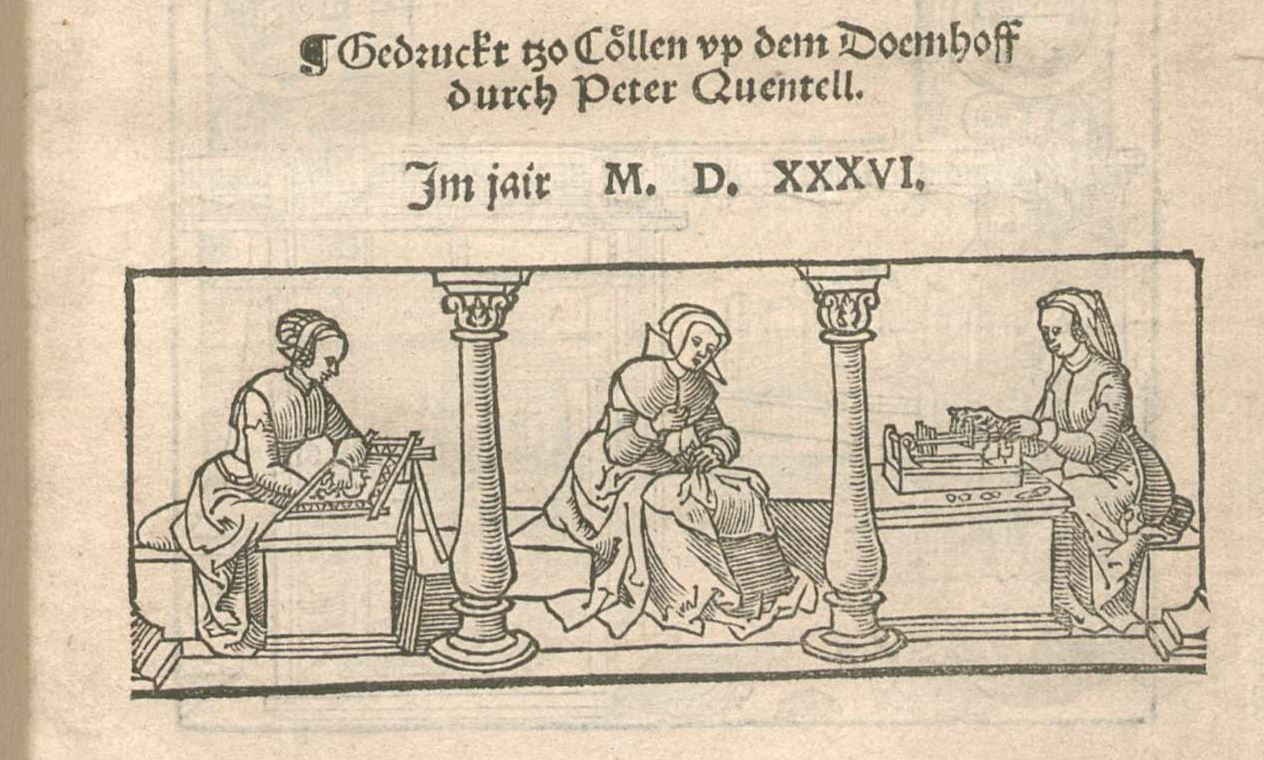
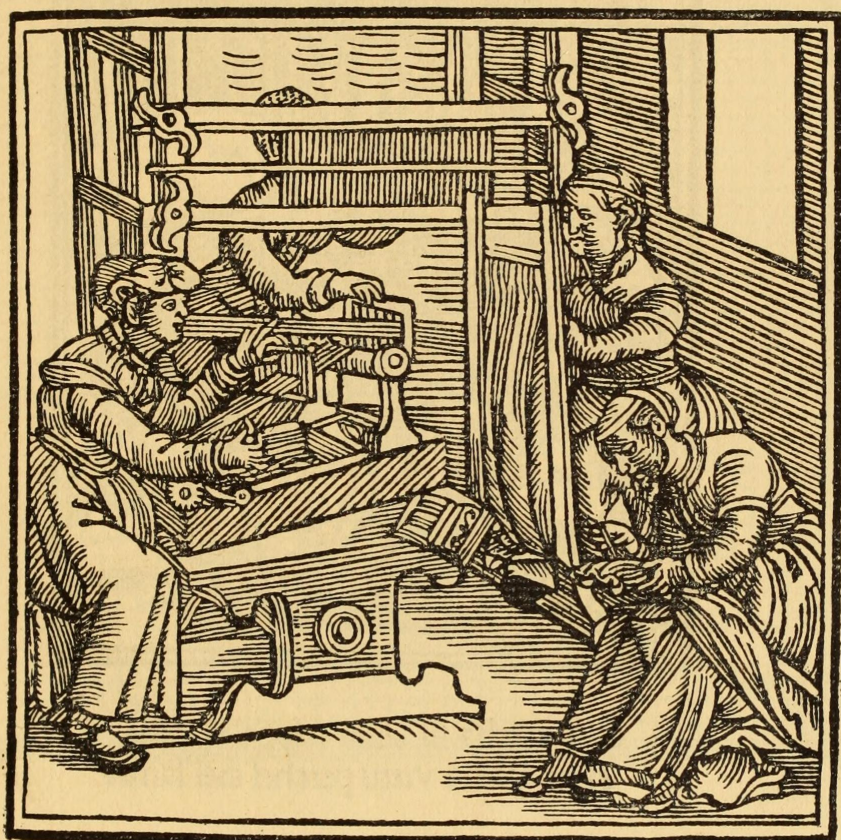
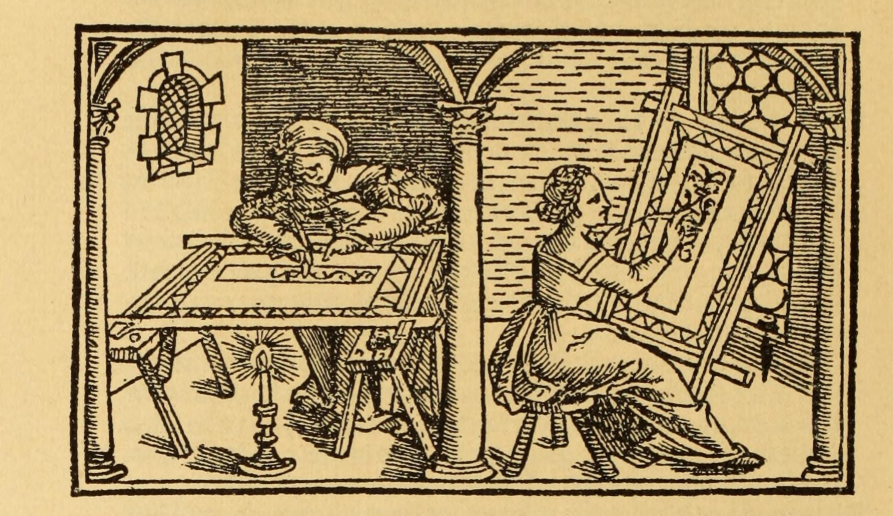
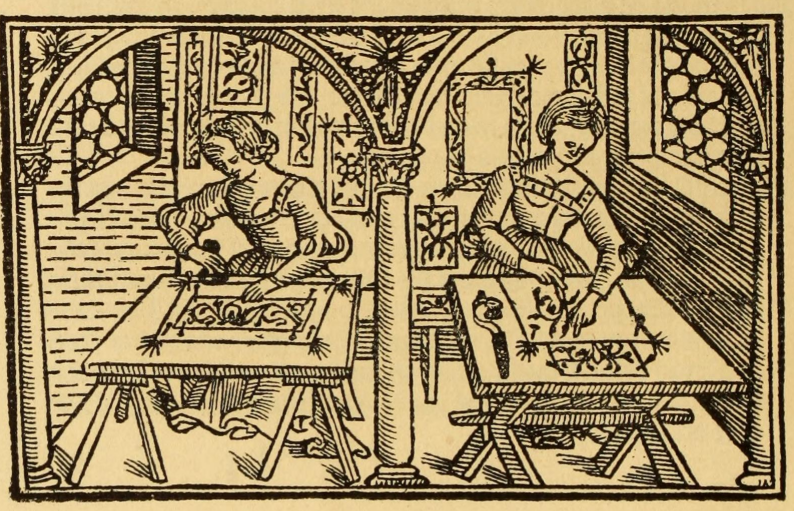
The first being that that I have already found the motto associated with Anne of Cleves is probably a common modelbuch pattern but also because at least three embroidery books use images of women from the North Rhine in their plates!
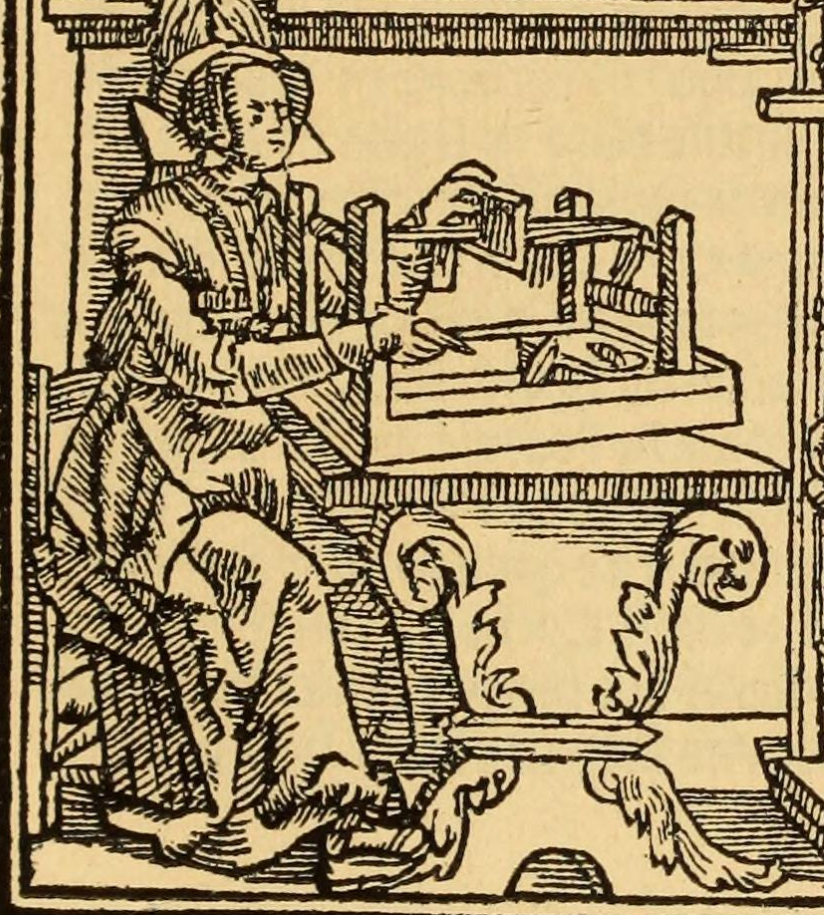
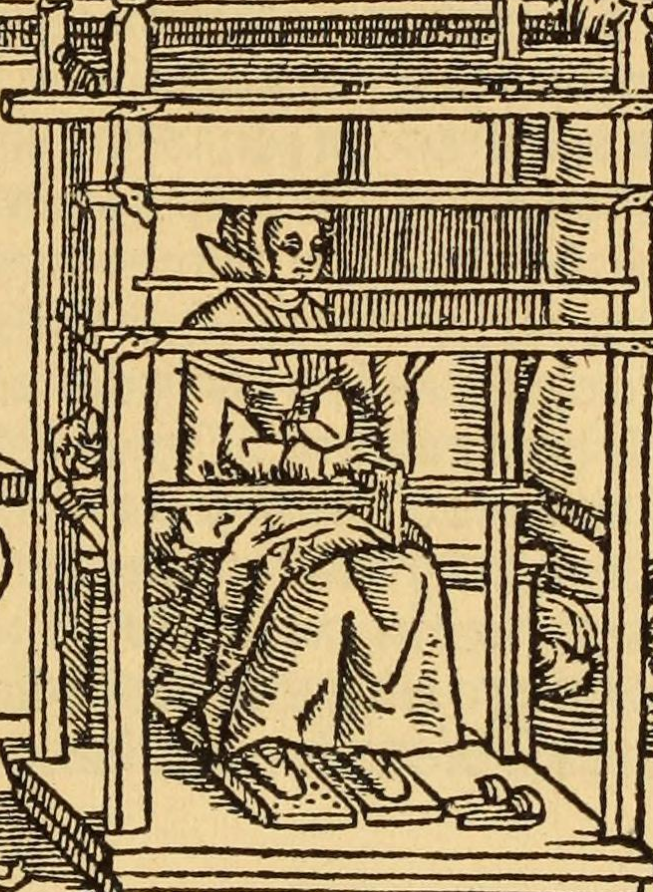
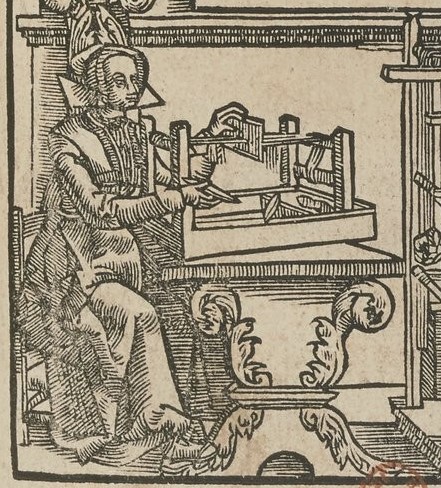
And next another embroidery book printed in France La fleur des patrons de lingerie […] ; Livre nouveau dict patrons de lingerie Publication date : 1515-1533
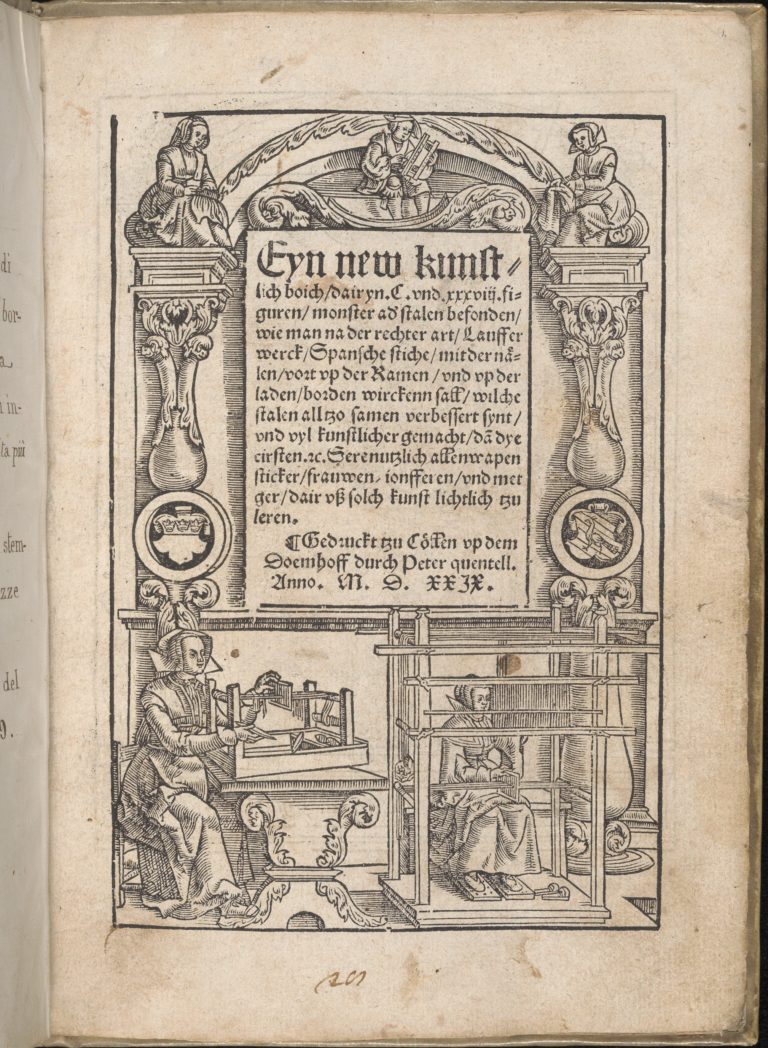
Neither the Italian nor the French works include a publishing date. This book printed in Cologne does have a date.
To further suggest this is the origin the dress depicted in this plate also matches well with dress of Cologne. Note the first figure even has the looped braids of an unmarried woman, and all three have pinned on sleeves.
Il burato repeats this plate at the start of each book along with a plate illustration how to copy the patterns.
These do appear to be Italian in terms of dress.
I do now have copies of all three books and there is a lot of repeated patterns, but I’ll leave it to Marion’s book to really explore this. I’m mostly trying to find the origin of these particular plates!
Peter Quentel (German, active Cologne, 1518–46)
Eyn new kunstlichboich, 1529
German,
Woodcut; Overall: 7 7/8 x 5 1/2 in. (20 x 14 cm)
The Metropolitan Museum of Art, New York, Rogers Fund, 1920 (20.50.2(1-49))
http://www.metmuseum.org/Collections/search-the-collections/354657
Yesterday I got so excited by lots of very nifty finds. And in the last week I have also come across the Boissard costume book (considered the first- but I think that means first in print) and the fully scanned one which includes several pages of intermediary plates.
These pages are either the costume image alone or the costume image with added borders and what looks to be script below. And that script looks very much like the font I have finally settle on for my book.
Anyway so that was great.
Not so great is the quick travel to a whole bunch of pain yesterday afternoon.
The medication we tried for the fibro I think may have helped but it also meant I was waking up nearly every hour at night and that is a side effect that doesn’t seem too bad but means it is a no go.
I deal with the poor wound healing of leflunomide, dealt with repeated hair loss with methotrexate, but when it means no sleep that’s when I need to ask for an alternative. And this headache is no fun either.
Anyway, today I may just do a batch of image editing and get the Cleves info actually up and ready. Found some really nifty coincidental images that may offer even more information.



![1581 Cleves. Fig. 1, page 17, Omnium pene Europae, Asiae, Aphricae, Americae gentium habitus [...] de Bruyn. Rijsmuseum BI-1895-3811](http://www.arrayedindreams.com/wp-content/uploads/2018/09/1581-debruyn-rijks-17-1.jpg)
![1581 Cologne, unmarried woman. Fig. 3, page 16, Omnium pene Europae, Asiae, Aphricae, Americae gentium habitus [...] de Bruyn. Rijsmuseum BI-1895-3811](http://www.arrayedindreams.com/wp-content/uploads/2018/09/1581-debruyn-rijks-16.jpg)
![1581 Aachen, unmarried girl. Fig. 9, page 18, Omnium pene Europae, Asiae, Aphricae, Americae gentium habitus [...] de Bruyn. Rijsmuseum BI-1895-3811](http://www.arrayedindreams.com/wp-content/uploads/2018/09/1581-debruyn-rijks-18-9.jpg)
![1581 Cologne, bride. Fig. 2, page 11, Omnium pene Europae, Asiae, Aphricae, Americae gentium habitus [...] de Bruyn. Rijsmuseum BI-1895-3811](http://www.arrayedindreams.com/wp-content/uploads/2018/09/1581-debruyn-rijks-11-2.jpg)
![1581 Cleves, unmarried woman. Fig. 3, page 17, Omnium pene Europae, Asiae, Aphricae, Americae gentium habitus [...] de Bruyn. Rijsmuseum BI-1895-3811](http://www.arrayedindreams.com/wp-content/uploads/2018/09/1581-debruyn-rijks-17-3.jpg)
![1581 Cleves. Fig. 2, page 17, Omnium pene Europae, Asiae, Aphricae, Americae gentium habitus [...] de Bruyn. Rijsmuseum BI-1895-3811](http://www.arrayedindreams.com/wp-content/uploads/2018/09/1581-debruyn-rijks-17-2.jpg)